How to Use a DeWalt 1600 Jump Starter
To use a DeWalt 1600 jump starter, charge it fully, clamp red to positive and black to negative, then start the engine. Remove the clamps in reverse order once the car runs.
On this page (9 sections)
- What should you check before you connect the DeWalt 1600?
- Where do the clamps go on the battery?
- How do you start the engine after connecting?
- How does a jump starter deliver that burst of power?
- What order do you remove the clamps?
- How do you charge and store the DeWalt 1600?
- When should you reach for a different jump starter?
- What mistakes make a jump pack fail?
- The short version
To use a DeWalt 1600 jump starter, charge it, clamp red to the positive post and black to the negative post, then start the engine. Once the car runs, remove the black clamp first and the red clamp second.
That is the whole sequence for the DeWalt jump starter 1600. How to use it safely comes down to three things: a charged pack, clean clamp contact, and the right order when you connect and disconnect.
What should you check before you connect the DeWalt 1600?
Check the charge level, the clamp condition, and the battery terminals first. A half-charged pack or dirty posts can turn a simple jump into a no-start.
Look at the battery gauge or LED indicator on the unit. A pack that has sat in a trunk through a cold winter needs topping up before you trust it.
Inspect the clamps for corrosion and the cables for nicks. Wipe the battery posts with a rag if they look crusty; clean metal gives the boost current a clear path.
Turn off the headlights, radio and climate fan. Those loads pull power away from the starter at the exact moment you need it.
It helps to read the pack's own label before the first use. The peak current rating and the engine sizes it covers are printed there, and that rating is what tells you whether the job is within the pack's range or needs a bigger unit.
Where do the clamps go on the battery?
Red goes to the positive post and black goes to the negative post. Positive is usually marked with a plus sign and a red cover; negative carries a minus sign.
Push each clamp so its teeth bite into the lead post, then give it a light tug to confirm it holds. A clamp that only touches the plastic cover does nothing.
Many DeWalt packs include a reverse-polarity warning that sounds or lights up if the clamps are swapped. If that happens, disconnect both clamps, wait a moment, and start again with the correct posts.
Some drivers clamp black to a bare metal engine bolt instead of the negative post. Both work on a modern car, but the negative post is simpler and less likely to contact something hot.
How do you start the engine after connecting?
Press the power button on the pack, wait a few seconds, then turn the key or push the start button. The unit needs a moment to send current through the clamps.
If the engine turns over slowly, give it another try after a short pause. Cranking in long bursts heats the starter, so keep each attempt to a few seconds.
If nothing happens, check that the pack is switched on and the clamps still have grip. A very flat battery sometimes needs two or three minutes of connection before it accepts enough charge to crank.
On a diesel, expect a little more patience. The glow plugs pull current before the starter does, so a second attempt is normal.
Don't pump the gas pedal on a fuel-injected car while you crank. The engine computer handles the fuel, and the extra pedal work does nothing for the start.
How does a jump starter deliver that burst of power?
A lithium pack stores energy in cells and releases it through a boost circuit that matches the car's 12 volt system. That is why a small box can turn a big engine.
Our explainer on how does a jump starter work covers the cells, the protection board and the clamps in plain terms. The short version: the pack acts as a second battery for a few seconds, not a charger.
That distinction matters when you use it. The jump pack gives the starter the current it needs to spin; it does not refill the car battery.
Drive for at least 20 minutes afterward so the alternator can recharge what the start used.
The protection board inside the pack is also why the clamps can sit on the posts without sparking. It senses the connection and waits for the power button before it releases current, and it cuts the flow if the clamps are reversed or shorted.
What order do you remove the clamps?
Pull the black clamp off first, then the red clamp, and return both to their holder or storage bag. This order keeps stray metal from bridging the two clamps.
Don't drop a loose clamp onto the engine block or let the two clamps touch each other after removal. A live pack with touching clamps creates a short that can damage the unit or the cables.
Check that the car keeps running after you disconnect. If it dies as soon as the pack comes off, the alternator or the battery itself needs attention.
Let the pack cool for a few minutes, then check its charge level. A jump or two on a cold morning uses a noticeable slice of the stored energy.
How do you charge and store the DeWalt 1600?
Recharge it after every use, and top it up every few months when it sits idle. Store it between 32°F and 86°F if you can, away from direct sun.
The charging port usually takes a USB-C or barrel plug cable; the gauge shows progress while it fills. A full charge on a mid-size pack typically takes a few hours.
Follow the steps in our guide on how to charge a jump starter for the port types, charging times and warning signs. Avoid leaving the pack on a charger for weeks at a time in a hot garage.
A glovebox or trunk works for everyday carry, but bring the pack inside during a deep freeze. Cold slows the chemistry inside lithium cells and cuts the starting current right when winter needs it most.
A car emergency kit built around this pack covers more than the jump. Add a tire gauge, a warm layer and a phone cable, since the pack's USB ports can top up a phone while you wait for a tow.
For a general walk-through that covers most brands, read how to use a portable jump starter. The steps mirror the DeWalt process, including the clamp order.
When should you reach for a different jump starter?
If your car has a large diesel engine or a completely dead battery, a higher-output pack gives you more margin. Match the pack to the engine, not to the price tier.
The Oxilam 6000A is the choice for a big truck, RV or tractor where a 1600 amp pack might struggle. It shows battery status on an LED screen and includes an 800 lumen light with strobe and SOS modes, which helps at night on a roadside.
Smaller packs for cars and light diesels
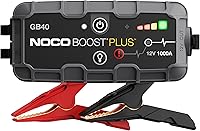
The NOCO Boost GB40 suits a sedan or small SUV owner who wants a pack that fits in the glovebox. It weighs about 2.4 lb and uses UltraSafe clamps that resist sparks and reverse polarity, so a hurried connection on a rainy night is harder to get wrong.
If you would rather skip the jump pack entirely and keep the battery healthy, a smart charger is the other tool worth owning.
The charger that prevents most jump starts
The NOCO GENIUS10 charges lead-acid and lithium batteries and can bring back deeply discharged ones with its Force Mode. It monitors the battery and adjusts the charge with temperature, so it can stay connected as a maintainer between drives.
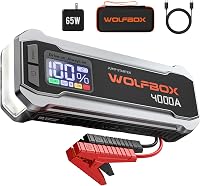
One more path: if you own another brand, our walk-through on how to use the WOLFBOX 4000A jump starter shows how the steps line up across models.
What mistakes make a jump pack fail?
The most common failures are a low charge, loose clamps and repeated long cranks. Each one is easy to avoid once you know the pattern.
- A pack left uncharged for a season may still show a light but lack the current for a cold engine.
- Clamps resting on painted metal or plastic covers send no power at all.
- Cranking for 10 seconds at a time drains the pack and strains the starter.
- Jumping a car with a bad alternator gets you moving, but the battery will die again soon.
If the car starts and then stalls, don't blame the jump pack. That points to fuel, spark or the charging system, and a mechanic should look at it.
The short version
To answer DeWalt jump starter 1600 how to use in one line: charge it, clamp red then black, start the car, and remove black then red. Keep the pack charged, keep the clamps clean, and the job takes under a minute.
Pick a 1600 class pack for a gas car or light diesel and a higher-output unit like the Oxilam 6000A for a heavy diesel. Keep a smart charger such as the NOCO GENIUS10 on the battery in winter so you need the jump pack less often.
Frequently asked questions
How do I know my DeWalt 1600 jump starter is charged enough?
Most DeWalt jump starters show a battery gauge or LED indicator, and you want it above halfway before a jump. If the unit has sat unused for a few months, charge it first so the boost circuit has full power.
Can I leave the clamps on after the car starts?
No. Remove the black clamp from the negative post first, then the red clamp from positive, and put the clamps back in their holder.
Leaving them connected risks a short if they touch each other or the engine bay.
Why won't the jump starter turn the engine over?
The usual causes are a low charge, clamps on the wrong posts, or a battery so flat it needs a few minutes of connection first. If it still clicks, the battery or the starter may be the real problem, not the jump pack.
Does the DeWalt 1600 jump starter work on diesel trucks?
Check the rating on your unit before using it on a diesel. A 1600 amp class pack suits many gas cars and light diesels, but a large diesel engine can need a higher peak current, so read the label on your own device.