How to Charge a Jump Starter
To charge a jump starter, use its approved charging input, cable, and power source, then wait for the full-charge indicator. Follow your model's temperature limits, disconnection steps, and storage recharge schedule.
On this page (8 sections)
- How to charge a jump starter step by step
- Which charger and cable should you use?
- How can you tell when a jump starter is fully charged?
- What should you do if the jump starter won't charge?
- How often should you recharge a jump starter?
- Can you use a car battery charger to charge a jump starter?
- What should you check before using a charged jump starter?
- How to charge a jump starter and choose the right setup
To charge a jump starter, use its approved input, cable, and power source, then wait for the full-charge indicator. Check the manual's temperature limits and disconnect the charger as directed.
Charging the portable pack is different from charging your car battery. Getting that distinction right helps you choose the correct equipment and avoid connecting a charger to the wrong terminals.
How to charge a jump starter step by step
Charge through the designated input port, with the jump starter disconnected from the vehicle. Before plugging anything in, find the instructions for your exact model and confirm the required power source.
- Inspect the pack and cable. Look for a cracked case, swelling, damaged insulation, moisture, or debris in the port; don't charge damaged equipment.
- Check the temperature. Bring the unit within its permitted charging range and let any condensation dry before connecting it.
- Identify the input. Use the port marked for charging the pack, rather than assuming every USB port accepts power.
- Match the charger and cable. Check their requirements in the manual, including any fast-charging standard needed.
- Connect as directed. Place the unit on a dry, stable surface with ventilation, then connect the cable and power source in the specified order.
- Confirm charging has started. Look for the charging signal described in the manual, then wait for the full-charge signal.
- Disconnect and pack it away. Close any port covers and keep the charging cable with the unit.
Stop charging if the pack becomes unusually hot, swells, smells odd, or shows a fault. Disconnect power if safe, and contact the brand before using it again.
How to charge a jump starter for the first time
Give a new jump starter the initial charge its manual requires before relying on it for an emergency. A charge indicator showing some remaining power does not mean you should skip that step.
Use this first charge to learn the normal charging and full-charge signals. Store the manual, cable, and any required adapter together so you can repeat the process without guessing.
Which charger and cable should you use?
Use a charger and cable that meet the pack's input requirements. A connector that fits does not confirm the correct voltage, power level, or charging support.
Check the adapter's output label rather than choosing by plug shape alone. For USB charging, the pack, adapter, and cable must support the charging mode you want.
A higher-wattage compatible adapter does not force its full output into a USB device. It also cannot make a jump starter charge faster than the input allows.
A computer USB port or older adapter may supply less power than a suitable wall charger. If the manual permits either source, choose the one that supports the intended charging speed.
Gooloo GT4000S: for drivers who recharge between trips
Choose the Gooloo GT4000S if charging from a vehicle is part of your routine. It has a Type-C input and includes a 100W car charger, a USB-to-Type-C cable, and a Type-C-to-Type-C cable.
GOOLOO says the included charger fills the pack from empty in 1.2 hours. That makes it useful for drivers who want a short recharge window, provided they have access to a working vehicle power outlet.
Remember that vehicle outlets vary: some switch off with the ignition, while others remain powered. Follow the vehicle's outlet instructions and avoid draining a weak starter battery to refill your jump pack.
GOOLOO rates the GT4000S for 12V vehicles with gasoline engines up to 12.0L or diesel engines up to 10.0L. Skip it if you need a different system voltage, or if your main need is maintaining a parked vehicle battery.
NOCO Boost GB40: for cars within its engine limits
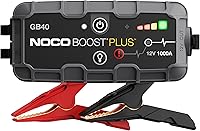
Choose the NOCO Boost GB40 for a portable emergency kit serving gasoline engines up to 6.0L or diesel engines up to 3.0L. Its spark-proof and reverse polarity protection help with connection mistakes, but you still need to follow the connection instructions.
It includes a USB-C charging cable, and NOCO gives a 3-hour recharge time. Confirm the power-source requirements before buying so you know whether an adapter you already have is suitable.
The GB40 suits drivers who can recharge ahead of a trip and keep the pack ready between uses. Skip it for engines above its stated limits or if you specifically need the GT4000S's included vehicle fast-charging setup.
How can you tell when a jump starter is fully charged?
Use the full-charge signal described in the manual, rather than elapsed time alone. Depending on the model, that may be a steady light, a completed row of lights, or a display reading.
Check what blinking means before assuming it signals normal charging. The same indicator can use different patterns for charging, low power, and a fault.
The GT4000S has an LED screen that shows product status. Learn its symbols before an emergency so you can distinguish charging progress from a warning.
Phone charging and flashlight use also draw from the pack's stored energy. Check the indicator afterward instead of assuming a previously full jump starter is still ready.
What should you do if the jump starter won't charge?
Check the power source, cable, input port, and temperature before deciding the battery has failed. Change one thing at a time so you can identify the cause.
Confirm the wall outlet or vehicle socket has power, then check that the cable is fully seated. If the manual allows an alternative cable or adapter, try a compatible replacement.
Check for debris or moisture without pushing metal tools into the port. If the unit came from a hot trunk or freezing vehicle, let it reach the permitted charging temperature first.
Follow the manual's fault-code instructions if charging still won't begin. Don't open the case, improvise a charging connection, or use repeated reconnecting to bypass an error.
How often should you recharge a jump starter?
Follow your model's storage schedule, and check its charge before travel and after use. A calendar reminder is more useful than trying to remember when you last plugged it in.
GOOLOO specifies recharging the GT4000S at least every 3 months during long-term storage. Its charging range is 14°F to 113°F, which differs from its broader operating and storage range.
Keep the unit away from prolonged heat, moisture, and direct sunlight. A pack that can operate in cold weather may still need to warm up before charging.
Don't deliberately run the battery empty before recharging unless the manual specifically calls for it. Our guide to how long a jump starter lasts explains how storage and care affect its useful life.
Can you use a car battery charger to charge a jump starter?
Use the jump starter's designated charging input, not a vehicle battery charger's clamps. The clamp connections supply starting power to a vehicle and are not a general charging inlet.
Don't attach a battery charger to those clamps unless the jump starter's manual explicitly permits it. Likewise, don't assume an output socket can accept charging power just because an adapter fits.
The NOCO GENIUS5 serves a different job: charging and maintaining compatible vehicle batteries. It is a 5A smart charger for 6V and 12V lead-acid batteries and supported LiFePO4 batteries.
Choose it for a compatible battery in a parked or seasonal vehicle when you have AC power available. Skip it if you need a self-contained roadside jump pack or a way to refill either portable unit above.
Select the correct voltage and battery chemistry before charging. Force Mode needs particular care, so don't use it as a routine response to an unexplained charging problem.
See jump starter vs battery charger for help choosing between emergency starting and battery maintenance.
What should you check before using a charged jump starter?
Confirm vehicle compatibility and a ready status, then inspect the cables and clamps. A full battery does not make a pack suitable for every engine or electrical system.
Check your vehicle manual for approved jump points and connection precautions. Our guide to how to use a portable jump starter explains the connection and starting steps.
Choose by system voltage and engine size before comparing charging convenience. The best jump starter guide helps narrow the options for different vehicles.
A jump starter supplies starting power; it does not fully replenish a weak car battery. Read whether a jump starter can charge a battery before relying on repeated starts to solve a recurring battery problem.
How to charge a jump starter and choose the right setup
Choose the GT4000S for vehicle-based fast charging, provided its vehicle coverage fits your needs. Choose the GB40 for vehicles within its engine limits when you can plan for its recharge time and provide a compatible power source.
Choose the GENIUS5 for vehicle battery charging and maintenance with AC power available. It serves a separate purpose from keeping a portable jump pack charged.
Knowing how to charge a jump starter starts with matching its input, cable, and power source. Keep those parts together, set a storage reminder, and use our guide to choosing a jump starter if you're still deciding which setup fits your vehicle.
Frequently asked questions
How long does it take to charge a jump starter?
Charging time depends on the supported input, power source, cable, and remaining charge. GOOLOO says the GT4000S charges from empty in 1.2 hours with its included 100W car charger; NOCO gives a 3-hour recharge time for the GB40.
Use the full-charge indicator rather than the clock alone.
Can I charge a jump starter with a phone charger?
You can use a phone charger if it meets your jump starter's input requirements and the manual permits it. Check the adapter's output, supported charging standard, and cable requirements.
A matching plug alone does not confirm compatibility, and a lower-power approved adapter may take longer to fill the battery.
How often should I recharge a jump starter in storage?
Follow your model's storage recharge schedule, and check its charge before a trip or after using its power-bank features. GOOLOO specifies recharging the GT4000S at least every 3 months during long-term storage.
Other models can have different requirements, so don't apply that interval to every jump starter.
Can I leave a jump starter plugged in overnight?
Leave a jump starter connected overnight only if its manual permits that charging routine and you can meet its precautions. An automatic charging feature does not override the unit's storage or disconnection instructions.
Keep it on a dry, stable surface with ventilation, away from bedding, direct sunlight, and water.