5 Best Jumper Cables (November 2026)
The best jumper cables for cold weather and roadside use include the Cartman 4 Gauge Jumper Cables for everyday drivers, the ExtreSpo 0 Gauge Jumper Cables for larger vehicle emergencies, and the ABIGAIL 1 Gauge Jumper Cables for mixed vehicle households.
On this page (13 sections)
- How we chose the best jumper cables
- Jumper cable features at a glance
- Which jumper cable set fits your situation?
- What length of jumper cables should you choose?
- What gauge and cable material do you need?
- Which clamp details matter in daily use?
- Are jumper cables useful in cold weather?
- How do you set up and use jumper cables safely?
- What mistakes make a jump-start less effective?
- How should you store and care for jumper cables?
- When do you need a charger or jump starter instead?
- Which jumper cables should you choose?
- Related reading
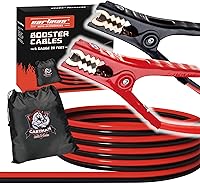
The Cartman 4 Gauge Jumper Cables are the best jumper cables for most drivers because they balance reach, manageable weight and clamps that fit top-post and side-post batteries. Choose ExtreSpo for larger vehicles and awkward parking, or Energizer's shorter set if carrying less weight matters most.
Your first buying decision is whether you can count on a second vehicle. Cables need a suitable donor vehicle, a safe place to park and access to the correct connection points.
For a battery that struggles in winter, read our guide to how cold weather drains a car battery. If another driver may not be nearby, compare a portable jump starter with jumper cables.
Our picks at a glance
-
1

-
2
 Best for larger vehicle emergencies
ExtreSpo 0 Gauge Jumper Cables
8.2/10 our score
See it on Amazon -
3

- 4
 Check it
Energizer 16-Foot Jumper Cables
Best for lighter emergency kits - 5
 Check it
Energizer 30-Foot Jumper Cables
Best for roadside assistance vehicles
How we chose the best jumper cables
We compared reach, conductor gauge, clamp design, vehicle guidance and carrying weight, with Cartman offering the most useful balance for an ordinary emergency kit. The other picks serve buyers who need less weight, more room between vehicles or a permanent connection.
Extra accessories only help if the cable itself suits your vehicle. Gloves and a bag are useful, but neither makes up for poor clamp contact or an unsuitable electrical setup.
We also separated occasional roadside use from assistance work. A long cable with an installation kit can suit a work vehicle while adding needless handling and setup for someone who wants a simple trunk kit.
Jumper cable features at a glance
Choose vehicle compatibility and enough usable reach before comparing accessories. The table shows how conductor size, length and weight change across these sets.
| Product | Best for | Gauge | Length | Weight | Our score |
|---|---|---|---|---|---|
| Cartman 4 Gauge Jumper Cables | everyday drivers | 4 gauge | 20 ft | 5.47 lb | 8.4 |
| ExtreSpo 0 Gauge Jumper Cables | larger vehicle emergencies | 0 gauge | 25 ft | 11.99 lb | 8.2 |
| ABIGAIL 1 Gauge Jumper Cables | mixed vehicle households | 1 gauge | 25 ft | 8.84 lb | 8.1 |
| Energizer 16-Foot Jumper Cables | lighter emergency kits | 6 gauge | 16 ft | 3.67 lb | 7.7 |
| Energizer 30-Foot Jumper Cables | roadside assistance vehicles | 1 gauge | 30 ft | 11 lb | 7.5 |
Gauge alone does not guarantee starting ability. Cable material, length, connections, battery condition and the donor vehicle all affect the result.
Which jumper cable set fits your situation?
Choose Cartman for general use, ExtreSpo or ABIGAIL for extra room around vehicles, and the shorter Energizer kit when weight matters more than reach. The long Energizer set serves a separate need: a planned roadside assistance setup.
Best jumper cables for everyday drivers: Cartman
Cartman 4 Gauge Jumper Cables: Best for everyday drivers
- 4 gauge CCA cable
- 20 ft reach
- Top-post and side-post clamps
- Carry bag included
A useful middle ground for an everyday emergency kit, with extra reach over the shortest pick and clamps that fit two common battery-post styles.
Pros
- Fits top-post and side-post batteries
- Less weight than the longer heavy-duty kits
- Carry bag included
Cons
- Less reach than the 25 ft options
- Copper-clad aluminum rather than solid copper
Cartman suits the driver who wants one set for a household car, a van or a mid-size pickup without carrying the largest kit here. Its 20 ft cable gives you room to work around different battery locations while remaining easier to carry than the longer heavy-duty options.
The rubber-covered clamps fit top-post and side-post batteries. That flexibility is useful when helping another driver, although you must still use any remote jump points specified by the vehicle manufacturer.
Cartman specifies operation down to -13 F, making the stated temperature limit worth checking against your local winters. The copper-clad aluminum construction also matters if you are comparing it with a solid-copper alternative outside this group.
Buy this set for a general emergency kit where reach and weight both matter. Skip it if your usual parking arrangement requires a longer cable, or if your vehicle's guidance calls for a different conductor size.
ExtreSpo for larger vehicles and awkward parking
ExtreSpo 0 Gauge Jumper Cables: Best for larger vehicle emergencies
- 0 gauge CCA cable
- 25 ft reach
- 12 V and 24 V compatibility
- Carry bag, gloves and brushes included
A heavier kit for drivers who need room around larger vehicles, with gloves and brushes to keep emergency supplies together.
Pros
- Extra reach for awkward parking
- Includes gloves and brushes
- Supports compatible 12 V or 24 V systems
Cons
- Heaviest set in this group
- More cable to handle and store
ExtreSpo suits drivers who need extra room around a larger vehicle and accept a heavier bag. Its 0 gauge, 25 ft cable is aimed at situations where battery location or parking access makes a shorter set inconvenient.
ExtreSpo specifies compatible 12 V and 24 V applications, including engines up to 8.0 L gas and 6.0 L diesel. Those limits do not make every donor vehicle suitable, so confirm that both vehicles permit the intended connection.
The brand says the cables are UL listed and specifies an operating range of -40 F to 140 F. The included gloves and brushes help keep basic supplies together, though brush use should follow the battery manufacturer's cleaning guidance.
Choose ExtreSpo if larger-vehicle coverage and included accessories justify the carrying weight. Skip it for a small emergency kit that rarely needs extra reach, and remember that dual-voltage compatibility never means connecting vehicles with different system voltages.
ABIGAIL for households with different vehicles
ABIGAIL 1 Gauge Jumper Cables: Best for mixed vehicle households
- 1 gauge CCA cable
- 25 ft reach
- 800 A specification
- Carry bag included
A long-reach option for households with different vehicles, with serrated clamps and less weight than the ExtreSpo kit.
Pros
- Room to work around different vehicle layouts
- Serrated jaws with non-slip coating
- Carry bag included
Cons
- Bulkier than the shorter picks
- Copper-clad aluminum rather than solid copper
ABIGAIL is a practical alternative for households that need extra reach but want less weight than ExtreSpo. Its 1 gauge, 25 ft cable gives you room around different vehicle layouts without moving to a permanent installation.
The clamps have serrated jaws and a non-slip rubber coating. These features help you position the clamps, but the jaws still need a firm grip on the designated metal connection point.
ABIGAIL says its PVC jacket resists oil, chemicals and water and stays flexible in warm and cold climates. That suits a kit stored with other vehicle supplies, provided you inspect it and remove contamination before packing it away.
Buy this set when reach and carrying weight are your main trade-off. Skip it if you want the included gloves and brushes from ExtreSpo, or if the shorter Cartman set already reaches comfortably between your usual connection points.
Energizer 16-Foot for a lighter carry kit
Energizer 16-Foot Jumper Cables: Best for lighter emergency kits
- 6 gauge CCA cable
- 16 ft reach
- Carry bag included
- Energizer specifies flexibility at -40 C
The lightest option here suits drivers who can position vehicles close together and want less weight in their emergency supplies.
Pros
- Lightest set in this group
- Carry bag included
- Cold-flexibility claim from Energizer
Cons
- Shortest reach in this group
- Thinner conductors than the other picks
Energizer's shorter set suits drivers who want less weight in a trunk emergency kit and can usually bring a donor vehicle close enough. At 3.67 lb, it is the lightest option in this group.
The 6 gauge, 16 ft cables use copper-clad aluminum and come with a carrying bag. Energizer says they remain flexible at -40 C, which helps distinguish cold handling from the separate question of whether a cable suits your engine.
The clamps have spring-loaded handles for positioning. Before buying, think about where your battery or remote terminals sit, since the distance between bumpers is only part of the route the cable must cover.
Choose this kit if your vehicle guidance permits it and short-range access is realistic. Skip it for awkward parking layouts or a larger engine that calls for thicker conductors, even if the smaller bag looks easier to store.
Energizer 30-Foot for an assistance vehicle
Energizer 30-Foot Jumper Cables: Best for roadside assistance vehicles
- 1 gauge CCA cable
- 30 ft reach
- 800 A specification
- Permanent installation kit and quick-connect plug
A specialist choice for an assistance vehicle that needs a fixed connection and enough cable to approach a stranded vehicle from behind.
Pros
- Longest reach in this group
- Permanent installation kit included
- Quick-connect plug
Cons
- Installation needs planning
- More cable than most private drivers need
Energizer's longest set suits an assistance vehicle that may approach a stranded vehicle from behind. The permanent installation kit and quick-connect plug are its main reason to buy over a conventional loose cable set.
Its 1 gauge, 30 ft cables carry an 800 A specification, and Energizer recommends applications up to 8 L gas and 6 L diesel engines. The set is specified for 12 V use.
Plan the fixed connection, cable routing and plug location before installation. Follow Energizer's instructions and the vehicle manufacturer's requirements, and use a qualified installer if you cannot make the connection correctly.
Choose this set for a vehicle with a clear assistance role and a suitable installation plan. Skip it for a basic personal emergency kit, where the extra cable and fixed hardware add work without solving a regular need.
What length of jumper cables should you choose?
Choose enough length to reach the actual connection points with slack, while both vehicles remain safely parked and separate. Buying only for the gap between their bumpers can leave you short once the cable runs into each engine bay.
Check battery access before adding length
Find your vehicle's designated jump points before you shop. A battery may sit under a cover, in the trunk or away from the approved connection points.
Picture a donor vehicle parked beside yours as well as facing it. A tight garage, a narrow driveway or a battery on the far side of the engine bay can change how much reach you need.
A longer cable gives you more parking options, but it also adds resistance, weight and loose cable to manage. Choose useful reach rather than buying the longest set by default.
Keep a safe route between vehicles
Allow room to route the leads away from fans, belts, hot exhaust parts and sharp edges. The cable should not pull a clamp sideways or become tight when you step away.
Do not join separate jumper cable sets to gain distance. Reposition the vehicles safely or use equipment suited to the job.
What gauge and cable material do you need?
Choose conductor size and material together, then check the cable manufacturer's vehicle guidance. A lower gauge number means a thicker conductor, but equal gauge numbers do not make different materials electrically equal.
Why copper-clad aluminum matters
All 5 picks use copper-clad aluminum, often shortened to CCA. Aluminum conducts electricity less efficiently than copper, so a CCA cable needs more conductor area to match the resistance of a solid-copper cable of the same length.
Do not judge conductor size by the outside jacket alone. Thick insulation can make a cable look substantial without telling you how much metal sits inside.
For larger engines, long cable runs or frequent assistance work, conductor material deserves extra attention. Compare the whole cable rather than assuming a heavy bag or a large clamp proves sufficient current capacity.
Why amp figures need context
A headline amp figure does not tell you how long that current can flow or how much voltage reaches the starter. For example, ExtreSpo describes its 1000 A figure as instantaneous current, which is different from a sustained operating limit.
Use those figures alongside engine guidance, cable construction and length. Poor clamp contact can still restrict current through an otherwise suitable cable.
If you are helping a diesel vehicle, our guide to how to jump-start a diesel truck explains why the battery arrangement and approved connection points need particular attention.
Which clamp details matter in daily use?
Prioritize secure contact and access to the correct terminals over clamp size alone. A large jaw is only useful if it can reach the designated point and grip it without slipping.
Look at the space around your positive terminal, its protective cover and any remote jump posts. A clamp that works on an exposed battery post may be awkward inside a recessed connection area.
Covered handles help you position the clamp, but they do not make the exposed jaws safe to touch together. Keep loose clamps separated throughout setup and removal.
Red and black leads help identify polarity, but always confirm the positive and negative markings on the vehicles. Never rely only on a terminal cover's color or on where the battery sits.
Are jumper cables useful in cold weather?
Yes, jumper cables can help in winter when a suitable donor vehicle and safe battery are available. Cold flexibility helps you uncoil and position a set, but it does not mean a battery is safe to jump.
A deeply discharged battery can freeze in cold conditions. Do not attempt a jump if freezing is suspected, even when you cannot see an obvious crack.
Check the cables before the cold season, when you have time to replace damaged equipment. Store them somewhere accessible without unloading heavy cargo at the roadside.
If you regularly park far from other drivers, a self-contained device may fit your emergency plan better. Our best jump starter for cold weather guide covers that option.
How do you set up and use jumper cables safely?
Use both vehicle manuals and the cable instructions as your procedure, since connection points and donor-vehicle rules can differ. Read them before attaching anything, and stop if the instructions conflict or either vehicle prohibits the jump.
Confirm the vehicles and battery are suitable
Check system voltage and verify that the donor vehicle is approved for supplying a jump. Do not assume a hybrid or electric vehicle can act as a donor because it has a low-voltage battery.
Do not jump a frozen, cracked, leaking, swollen or otherwise damaged battery. Strong unusual odors or uncertainty about battery condition are reasons to get roadside help.
Choose a safe parking position, set both parking brakes and select Park or Neutral as instructed. Turn off unnecessary electrical loads and keep keys or start controls in the required state.
Identify the full connection sequence first
Locate the positive connection on each vehicle and the prescribed negative or ground points. Many vehicles require the final negative connection at a designated ground away from the discharged battery.
Review the full connection and removal order before starting. Never improvise by attaching clamps to fuel lines, thin brackets, painted surfaces or an unidentified piece of metal.
Wear eye protection and remove metal jewelry. Keep your face away from the battery and do not smoke or allow flames nearby.
Route, connect and attempt the start
Lay out the cable route before making connections. Keep the clamps apart, then attach them in the exact order specified for the vehicles.
Check that each clamp grips firmly and that the leads clear moving parts. Electric cooling fans can start unexpectedly, so do not leave a loop near a fan even with the engine stopped.
Follow the manuals for donor-engine operation, waiting periods and cranking limits. If the engine does not start within the allowed attempts, stop rather than continuing until the cables or clamps become hot.
Remove the cables and address the cause
Disconnect in the prescribed order while keeping removed clamps from touching each other or either vehicle. Watch the cable route around moving parts if an engine is running.
A successful start does not confirm that the battery is fully charged or healthy. For a self-contained emergency option, see our portable jump starter buying guide.
What mistakes make a jump-start less effective?
The most common avoidable problems are poor contact, strained cables and repeated cranking without finding the fault. Check the setup before assuming you need a larger cable.
- Gripping plastic or paint: Clamp to the designated conductive connection point, not a nearby cover or coated bracket.
- Reaching across the engine: Route cables before connecting so you do not need to move live clamps around belts or fans.
- Ignoring loose terminals: A loose vehicle battery connection can prevent useful current flow and needs proper repair.
- Cleaning while connected: Disconnect the jumper cables before any terminal cleaning, and follow the battery manufacturer's instructions.
- Continuing through heat or smoke: Stop the attempt if a cable or clamp becomes unusually hot, insulation softens or smoke appears.
- Assuming every no-start is a flat battery: Jumper cables cannot repair a failed starter, damaged wiring or another mechanical fault.
Do not lean over the battery while someone cranks the engine. Agree on the procedure before either driver turns a key or presses a start button.
How should you store and care for jumper cables?
Store cables dry, loosely coiled and protected from sharp objects. A carry bag keeps the set together, but the insulation and clamp springs still need inspection.
After use, check the full length for cuts, crushed sections or exposed conductors. Inspect the clamp jaws, hinges and cable attachments for looseness, heavy corrosion or heat damage.
Let the set dry before closing the bag. Remove dirt with a method allowed by the cable manufacturer, and avoid solvents that could damage insulation.
Use broad loops rather than tight bends at the clamps. Keep the bag away from items that could puncture it, and secure it so it does not move around the cargo area.
Replace damaged equipment rather than covering exposed wire with tape and returning it to the emergency kit. Make cable inspection part of a regular check of your flashlight, gloves and other roadside supplies.
When do you need a charger or jump starter instead?
Choose a jump starter for independent starting assistance and a battery charger for controlled recharging. Jumper cables fit situations where another suitable vehicle is available.
A portable unit still needs enough charge and the right capacity for your vehicle. Cables need no stored charge of their own, but depend on a donor and room to use it safely.
Repeated short drives after a jump may leave a depleted battery undercharged. Our best car battery charger guide helps you choose equipment for replenishing the battery rather than simply getting the engine running.
If the battery repeatedly goes flat, have its condition and the charging system checked. Buying thicker cables does not address the cause of recurring discharge.
Which jumper cables should you choose?
Choose the best jumper cables for your parking situation and vehicle requirements, then make sure you can carry and handle the set comfortably. Use these decision rules to narrow the choice.
- Everyday household car or mid-size pickup: Start with Cartman if its reach and vehicle guidance fit your needs.
- Larger vehicle with awkward access: Choose ExtreSpo when the heavier kit and included accessories earn their place.
- Several vehicles with different layouts: Choose ABIGAIL for long reach with less weight than ExtreSpo.
- Light emergency supplies and close parking: Choose the shorter Energizer set if the conductor size suits your vehicle.
- Dedicated assistance vehicle: Choose the long Energizer set when you have a suitable permanent installation plan.
Before putting the bag away, locate your jump points and read the vehicle's procedure. If access to a donor is your weak point, compare a jump starter with jumper cables before deciding.
Related reading
Choose a self-contained jump starter if your emergency plan needs to work without another driver. These guides help with that decision and with recurring winter battery trouble.
Our top 3 picks at a glance
-
1
-
2
Best for larger vehicle emergencies
ExtreSpo 0 Gauge Jumper Cables
8.2/10 our score
See it on Amazon -
3
Frequently asked questions
Are thicker jumper cables always better?
Thicker conductors can reduce resistance, but the right set also needs suitable length, sound clamps and vehicle compatibility. Lower gauge numbers mean thicker conductors.
Compare the conductor material too, because copper-clad aluminum and solid copper do not carry current equally at the same gauge and length.
Can you use 24 V jumper cables on a 12 V car?
A cable set approved for both voltages can serve a compatible 12 V jump-start, but it does not convert voltage. Both vehicles must use the voltage and procedure required by their manuals.
Never connect a 24 V donor system to a 12 V car simply because the cables support both.
Can jumper cables charge a dead battery?
Jumper cables provide a connection to another vehicle for starting assistance; they are not a controlled battery charger. A successful start does not mean the battery has recovered its charge or condition.
Use an appropriate charger and have a repeatedly discharged battery and the vehicle's charging system checked.
How often should you replace jumper cables?
Replace jumper cables when the insulation splits, conductors become exposed, clamps loosen or springs no longer hold securely. There is no single replacement age that fits every set and storage condition.
Inspect them before use and during routine emergency-kit checks, especially after heat exposure, moisture or a difficult jump-start.