Portable Car Jump Starters: A Complete Guide
Choose a portable jump starter that matches your vehicle’s voltage and engine size, with features you’ll use. Check the brand’s engine limits, clamp protections, recharge needs and storage instructions before buying.
On this page (8 sections)
- What does a portable jump starter do?
- How do you choose a portable jump starter?
- Which portable jump starters stand out?
- How do these portable jump starters compare?
- What should you check before trying to jump-start a car?
- How is a jump starter different from a battery charger?
- How do you keep a portable jump starter ready?
- Which portable jump starter should you choose?
Choose a portable jump starter that matches your vehicle’s voltage and engine size so you can attempt a jump without another car. Then check its clamp protections, charging method and storage needs.
Peak amps are useful for comparing models, but they do not tell the whole story. A unit’s stated engine limits, operating instructions and protection features matter just as much.
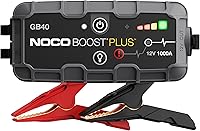
The NOCO Boost GB40 weighs 2.4 lb and supports engines up to 6.0L gas or 3.0L diesel. The NOCO Boost GB70 covers larger engines, Gooloo GP4000 supports all gas engines and diesels up to 10.0L, and Wolfbox 4000A supports gas and diesel engines under 10L.
What does a portable jump starter do?
A portable jump starter stores electrical energy and supplies power to help turn a vehicle’s engine over. It does not repair a failing battery or replace a battery charger.
You connect the unit’s clamps as directed by the vehicle and jump starter manuals, then follow the steps to try starting the engine. The details vary by model, so keep the manual with the unit or save its instructions on your phone.
A jump starter may also provide other functions. The four models below include USB charging and lights, but those extras should come after checking whether the unit suits your vehicle.
To understand the process in more detail, read how a jump starter works. If you need the starting steps, see how to use a portable jump starter.
How do you choose a portable jump starter?
Choose by matching vehicle compatibility, useful features and upkeep to your needs. Start with your engine, then compare the unit’s protection features, charging options, size and instructions.
Check portable jump starter engine limits first
Look for the supported gas and diesel engine sizes in the jump starter’s specifications. Compare those limits with your vehicle’s engine, and confirm that both use a compatible 12V system.
If your vehicle is a diesel truck, consider its engine size and cold-weather needs before choosing. Our guides to jump starters for diesel trucks and jump starters for trucks and SUVs cover those use cases.
Use peak amps as one comparison point
Peak amps describe a model’s stated peak output, but the number alone does not show how well it will start every engine. Compare output alongside the brand’s engine limits and the jump starter’s instructions.
Our guide to how many amps a jump starter needs explains how to read the numbers without treating them as a guarantee.
Look for clear clamp protections
Spark-proof connections and reverse-polarity protection can help reduce some connection risks. They do not replace careful setup: inspect the clamps, follow the manual and stop if the device signals a problem.
The NOCO Boost GB40 and NOCO Boost GB70 both have spark-proof and reverse-polarity protection. Gooloo describes 10 built-in protections, while Wolfbox warns users not to reverse clamp polarity and to follow its instructions.
Decide which extra features matter
USB ports can charge personal devices, while an integrated light can help you see during a roadside stop. An LCD display can show status information, but extra ports and lights do not make an incompatible starter suitable for your engine.
Think about what you will actually use. A compact unit may be easier to store, while a larger engine range or a particular charging feature may matter more for another vehicle.
Plan for charging and storage
A jump starter needs enough charge to help when you need it. Check how the model recharges and how often the brand advises checking or topping up its charge.
Gooloo advises charging its GP4000 every 2 to 3 months during extended storage. For more upkeep guidance, read how to charge a jump starter.
Which portable jump starters stand out?
The NOCO Boost GB40 fits smaller engines and weighs less than the other models here. The other three offer higher stated engine limits, with differences in charging ports, lights and status displays.
NOCO Boost GB40: compact storage
The NOCO Boost GB40 suits drivers who want a compact jump starter for engines up to 6.0L gas or 3.0L diesel. It weighs 2.4 lb and includes spark-proof and reverse-polarity protection.
NOCO says the NOCO Boost GB40 can provide up to 20 starts per charge and recharge in 3 hours. Its 100-lumen light has 7 modes, including SOS and strobe.
The 12V unit’s 1000A peak output is lower than the other three models here, so check its engine limits closely before choosing it. It also has an IP65-rated housing and comes with a microfiber storage bag.
Choose the NOCO Boost GB40 if its engine range covers your vehicle and low weight matters. Consider another model if your engine falls outside those limits.
NOCO Boost GB70: higher NOCO engine limits
The NOCO Boost GB70 supports engines up to 8.0L gas and 6.0L diesel. It weighs 5 lb and includes spark-proof and reverse-polarity protection.
NOCO says the NOCO Boost GB70 can provide up to 40 starts per charge and recharge in 6 hours. Its 400-lumen light has 7 modes, including SOS and strobe, and the unit can charge phones and tablets.
This model is heavier than the NOCO Boost GB40, so consider where you plan to store it. Choose it when its larger engine range fits your vehicle and you can carry the extra weight.
Gooloo GP4000: broad stated engine range
Gooloo rates the Gooloo GP4000 for 12V vehicles with all gasoline engines and diesel engines up to 10.0L. It has a 4000A peak output, weighs 3.9 lb and includes dual USB outputs, a USB-C charging port and a flashlight.
Gooloo says the Gooloo GP4000 can provide more than 60 starts for most vehicles on a full charge. Its BOOST button is intended for extremely low battery voltage, so follow the manual before using that mode.
Gooloo gives an operating temperature range of -4°F to 140°F. Choose it if its engine coverage and multiple USB outputs fit your needs, and note that a wall charger is not included.
Wolfbox 4000A: display and fast charging
The Wolfbox 4000A supports 12V vehicles with gas and diesel engines under 10L. It has a 4000A peak output, an LCD display and a USB-C port rated for 65W input and output.
Wolfbox says the Wolfbox 4000A can recharge in 1.3 hours with the included PD65W fast charger. It also has a USB-A port, a one-touch boost function and a flashlight with SOS, strobe and high-beam modes.
Wolfbox gives it an IP64 protection rating and an operating range from -4°F to 140°F. Choose it if you want an LCD display and 65W USB-C charging, and follow its clamp-polarity warning.
How do these portable jump starters compare?
The main differences are engine limits, weight and charging features. Use the table to narrow your options, then check the model’s instructions for your specific vehicle.
| Model | Peak output | Stated engine range | Weight | Notable extras |
|---|---|---|---|---|
| NOCO Boost GB40 | 1000A | Up to 6.0L gas, 3.0L diesel | 2.4 lb | USB power bank, 100-lumen light |
| NOCO Boost GB70 | 2000A | Up to 8.0L gas, 6.0L diesel | 5 lb | USB power bank, 400-lumen light |
| Gooloo GP4000 | 4000A | All gas engines, up to 10.0L diesel | 3.9 lb | Dual USB outputs, USB-C charging port, BOOST button |
| Wolfbox 4000A | 4000A | Under 10L gas and diesel | 3 lb | LCD display, 65W USB-C |
Engine limits do not guarantee a successful start. A damaged battery, poor connection or another vehicle fault can prevent the engine from starting.
If your engine is near a model’s stated limit, confirm compatibility with the brand and your vehicle manual before buying. For more comparisons, visit our best jump starter guide.
What should you check before trying to jump-start a car?
Check the vehicle and jump starter instructions before connecting anything. A jump starter’s protection features do not make it safe to skip the stated steps.
Confirm that the vehicle’s battery system is compatible with the unit. Inspect the clamps and cables, and do not use them if they are damaged.
Do not attempt to jump-start a frozen, leaking or visibly damaged battery. If you are unsure about its condition, seek qualified help before connecting the unit.
Follow the instructions for clamp placement and connection order. Keep the clamps from touching each other, and stop if the unit signals a fault or the connections do not seem secure.
If the vehicle does not start, follow the manual’s limits on attempts and cooling time. The battery may be damaged, or the fault may be elsewhere, so seek qualified help if needed.
Read how to use a portable jump starter before storing a unit in your car. If cold weather is a concern, our article on cold weather and car batteries explains why a battery may struggle in winter.
How is a jump starter different from a battery charger?
A jump starter provides a short burst of power to help start a vehicle, while a battery charger restores charge over a longer period. USB charging for phones does not make a jump starter a car battery charger.
If your battery repeatedly needs a jump, have the battery and charging system checked. A compatible battery charger may help with charging or maintenance, but it will not repair a damaged battery or another vehicle fault.
Compare the two options in our jump starter vs battery charger guide. For more detail about the distinction, see whether a jump starter can charge a battery.
How do you keep a portable jump starter ready?
Keep it charged according to its instructions and check it before trips when you may need it. Store the clamps and cables with the unit so you can find them quickly.
Heat, cold and long storage can affect battery-powered equipment. Follow the brand’s storage guidance, and do not assume an operating temperature range also applies to long-term storage or charging.
A jump starter’s built-in flashlight can help with visibility, but it does not replace warning devices or safe roadside practices. If you stop near traffic, prioritize getting yourself and passengers to a safer location.
For a broader view of upkeep and expected service life, read how long a jump starter lasts.
Which portable jump starter should you choose?
Choose the NOCO Boost GB40 for low weight if its engine range fits, or the NOCO Boost GB70 for larger NOCO engine limits. Consider the Gooloo GP4000 for its engine coverage and dual USB outputs, or the Wolfbox 4000A for its LCD display and 65W USB-C charging.
Before buying a portable jump starter, confirm engine and voltage compatibility, then choose the charging features you will use. Our guide to choosing a jump starter walks through those checks.
Frequently asked questions
How many amps should a portable jump starter have?
Choose output by checking the jump starter brand’s supported engine range and your vehicle’s engine type and size. Peak amps can help compare models, but the number alone does not prove compatibility or starting performance, so check the engine limits and operating instructions before choosing a unit.
Can a portable jump starter start a completely dead battery?
Some jump starters can help with a deeply discharged battery, but success depends on the unit and the battery’s condition. Follow the device instructions, including any boost mode steps, and do not attempt to jump-start a damaged or frozen battery; seek qualified help if you are unsure.
How often should you charge a portable jump starter?
Follow the brand’s charging and storage instructions, and check the charge before a trip or before you need roadside help. Gooloo advises charging the GP4000 every 2 to 3 months during extended storage, but use the schedule and charging method specified for your own model.
Can a jump starter charge a car battery?
A portable jump starter supplies power to help start an engine; it does not replace a battery charger that restores charge over time. Some jump starters also charge phones or other devices through USB ports, but that feature does not make them suitable for charging your car battery.
Is a portable jump starter better than jumper cables?
A jump starter is more useful when you need a power source without another vehicle present, while jumper cables require a suitable external source. Your choice depends on how you travel, what equipment you can store and which method you can use according to your vehicle’s instructions.