5 Best Jump Starter for Cold Weather (November 2026)
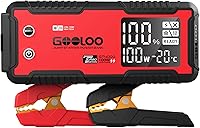
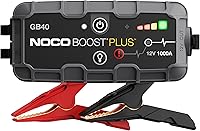
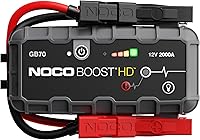
The best jump starters for cold weather include the NOCO Boost GB40 for compact emergency kits, the Gooloo GP4000 for everyday winter drivers, and the Wolfbox MV24A for roadside tire top-ups.
On this page (9 sections)
- How we chose the best cold weather jump starters
- Which cold weather jump starter fits your vehicle?
- What temperature limits matter for winter use?
- How should you match a jump starter to your engine?
- How do you prepare a jump starter before winter?
- How do you use a jump starter on a cold morning?
- Which winter mistakes leave drivers stranded?
- When do you need a charger instead of another jump?
- Which cold weather jump starter should you choose?
The best cold weather jump starter for severe winters is the Gooloo GT4000 Arctic, thanks to its dedicated preheating feature. The NOCO Boost GB40 has the highest site-wide score here and suits compact emergency kits when its engine fit and temperature guidance match your needs.
Choose around the coldest conditions where you'll park, your engine and your ability to keep the pack charged. A unit that fits those needs is more useful than one chosen for the largest amp number.
Our picks at a glance
-
1

-
2

-
3

How we chose the best cold weather jump starters
We compared cold-weather guidance, engine compatibility, connection features and charging needs to identify which drivers each model suits. The product order follows site-wide scores, while the recommendations account for the specific demands of winter.
Severe cold changes the decision because a general-purpose pack and a model with dedicated preheating serve different needs. Extra tools matter only after the jump starter meets your vehicle's requirements.
We also considered the practical parts of ownership: keeping accessories together, reaching the approved connection points and arranging a suitable charger. Those details can decide whether your emergency kit is ready when you need it.
For help interpreting current figures, read how many amps you need for a jump starter. Then check what size jump starter you need against your engine rather than assuming every car or truck needs the same pack.
| Product | Best for | Peak current | Engine fit | Cold-weather guidance | Our score |
|---|---|---|---|---|---|
| NOCO Boost GB40 | compact emergency kits | 1000 A | Up to 6.0L gas, 3.0L diesel | Check manual for temperature limits | 9.3 |
| Gooloo GP4000 | everyday winter drivers | 4000 A | All gas, up to 10.0L diesel | Operation down to -4°F | 8.6 |
| Wolfbox MV24A | roadside tire top-ups | 4000 A | Up to 10L gas and diesel | Operation down to -4°F | 8.3 |
| Gooloo GT4000 Arctic | severe winter climates | 4000 A | Up to 12L gas, 10L diesel | Preheating rated to -40°F | 7.9 |
| Oxilam 8000A | awkward battery access | 8000 A | Oxilam claims all gas and diesel engines in 12V vehicles | Operation down to -4°F | 7.2 |
Which cold weather jump starter fits your vehicle?
Choose the model that covers your engine, expected temperatures and roadside needs. Each recommendation below explains who should buy it and when another option makes more sense.
NOCO Boost GB40: Best for compact emergency kits
- 1000A peak current
- Up to 6.0L gas and 3.0L diesel
- IP65-rated housing
- 100-lumen flashlight
A compact choice for drivers whose engines fit its limits and who want protected connections and weather-resistant housing. Confirm its operating and storage temperatures before choosing it for winter.
Pros
- Compact body for smaller emergency kits
- Spark-proof and reverse-polarity protection
- USB-C charging cable and storage bag included
Cons
- Temperature limits need a manual check
- Lower engine limits than the other picks
NOCO Boost GB40: a compact cold weather jump starter option
The GB40 suits drivers who want a compact emergency pack for an engine within its limits. It makes sense for a smaller kit where bulky equipment would be left at home.
Its 1000A peak current comes with engine limits of up to 6.0L gas and 3.0L diesel. Spark-proof and reverse-polarity protection help guard against connection errors, while the IP65-rated housing adds protection against water and dust.
The 100-lumen flashlight has 7 modes, including SOS and strobe. Use it to help locate connections, but arrange separate light if you need both hands free around a crowded engine bay.
Skip it for an engine beyond its limits, and confirm the manual's temperature guidance before buying for severe winter conditions. Its higher overall score doesn't guarantee suitability for a colder location.
For larger vehicles, compare jump starters for trucks and SUVs. The NOCO GB40 review provides a closer look if this model fits your shortlist.
Gooloo GP4000: Best for everyday winter drivers
- 4000A peak current
- -4°F to 140°F operating range
- All gas and up to 10.0L diesel engines
- BOOST button
A practical fit for compatible vehicles in winters that stay within its operating range. Its included case keeps the jump starter and cables together, but you'll need a suitable charging source.
Pros
- Stated operating temperature range
- BOOST mode for extremely low battery voltage
- All-metal clamps and EVA case included
Cons
- Not suited to temperatures below its operating limit
- Wall charger is not included
Gooloo GP4000: a straightforward winter emergency pack
The GP4000 fits drivers who want a dedicated jump starter with a stated winter operating range. Gooloo rates it from -4°F to 140°F, with 4000A peak current and compatibility covering all gas engines and diesel engines up to 10.0L in 12V vehicles.
Its BOOST button addresses extremely low battery voltage. Learn that control before an emergency, because using a special mode should follow a clear diagnosis and the manual's steps.
All-metal clamps and an EVA case make this a practical kit to keep together. USB outputs also let it supply power to small devices, though emergency starting should remain your first priority.
Skip it if your parking temperatures fall below its operating limit, or if you need an integrated tire inflator. A broad engine range doesn't compensate for a temperature mismatch.
A wall charger isn't included, so arrange a suitable charging source when setting up the kit. Don't wait for a low-charge warning on a cold morning to discover that you lack the right adapter.
Wolfbox MV24A: Best for roadside tire top-ups
- 4000A peak current
- Operation down to -4°F
- 160 PSI air compressor
- 65W USB-C charging
Choose this combination unit when you need both starting assistance and tire inflation. Plan space for the unit and accessories, and arrange a compatible charger before winter.
Pros
- Jump starter and tire inflator in one unit
- 400-lumen light with emergency modes
- EVA carrying bag included
Cons
- Larger dimensions than the GB40
- Charging adapter is not included
Wolfbox MV24A: starting help and tire inflation together
The MV24A suits drivers who want one kit for a weak battery and low tire pressure. Its 160 PSI compressor is intended for tire inflation on pickup trucks and smaller vehicles, alongside starting assistance for compatible 12V engines up to 10L gas or diesel.
The useful reason to choose it is routine tire top-ups, rather than the compressor's maximum pressure alone. A tire's correct pressure comes from the vehicle's tire-pressure label, not the inflator's upper limit.
A 400-lumen light offers distress, strobe and high-beam modes. The unit measures 9.39 x 5.28 x 2.16 inches, so check your storage space with room for the hose, clamps and other accessories.
Skip it if you already carry an inflator and want a kit focused only on starting. Both tasks draw from the same pack, so check its charge after inflating tires.
USB-C charging supports 65W, but a charging adapter isn't included. Arrange a compatible adapter if you want to use that charging capability.
Gooloo GT4000 Arctic: Best for severe winter climates

- 4000A peak current
- Preheating rated to -40°F
- Up to 12L gas and 10L diesel
- 100W car charger included
The clearest fit for severe cold because of its dedicated battery preheating feature. The included car charger also suits drivers who want to replenish the pack during travel.
Pros
- Lowest stated temperature capability here
- Dedicated preheating technology
- 100W car charger and carrying bag included
Cons
- Preheating requires following its specific instructions
- Long standby claim still requires periodic recharging
Gooloo GT4000 Arctic: the severe-cold choice
The GT4000 Arctic is the clearest choice here for severe winter climates. Gooloo rates its preheating technology to -40°F, pairing that feature with engine limits of up to 12L gas and 10L diesel in compatible 12V vehicles.
Preheating is the reason to choose it over a general-purpose pack. Read the activation steps and indicators ahead of time so you can follow the process without guessing beside the vehicle.
Its kit includes a 100W car charger, both USB-A to USB-C and USB-C to USB-C cables, smart jumper cables and a carrying bag. That charging setup suits drivers who want to replenish the pack during travel.
Gooloo says a full recharge takes 1.2 hours with the included charger. Arrange regular charging access before a trip rather than depending on a vehicle that may not start.
Skip it if severe cold isn't part of your use and compact storage or tire inflation matters more. Choose its cold-specific feature because you need it, rather than treating it as a substitute for correct engine fit.
Oxilam 8000A: Best for awkward battery access

- 8000A peak current
- -4°F to 140°F operating range
- Extended jumper cables
- 10 protection features
Its extended cables make it worth considering when battery access complicates pack placement. Check that the cables reach your vehicle's approved connection points and confirm engine suitability.
Pros
- Extended cables with 8 AWG wire
- Low- and high-temperature protection
- Oxilam provides a 4-year warranty
Cons
- Broad engine claim needs confirmation for your vehicle
- Higher peak current does not extend its cold limit
Oxilam 8000A: extra reach for difficult connections
The Oxilam suits drivers whose battery layout makes cable reach a priority. Its extended jumper cables use 8 AWG wire, and the clamps have an ergonomic grip.
Check the route from a stable pack position to your vehicle's approved positive and ground points. Extra cable helps only if it reaches those points without stretching across moving parts or forcing the pack into an unsafe position.
Oxilam claims its 8000A model supports all gas and diesel engines in 12V vehicles. Confirm your engine's suitability rather than relying on that broad claim alone.
It includes 10 protection features, including low- and high-temperature protection, and a 3-mode flashlight. Oxilam backs it with a 4-year warranty.
Skip it if the main attraction is the amp figure and your vehicle doesn't need the extra cable reach. Its operating range of -4°F to 140°F doesn't make it a substitute for a dedicated severe-cold model.
What temperature limits matter for winter use?
Check operating, storage and charging limits separately. A pack may be allowed to discharge at a temperature where charging it is not permitted.
Choose for the coldest parking conditions
Use the forecast for where the vehicle will sit, including overnight stops. A heated garage at home doesn't cover an outdoor airport lot or a weekend parked away from power.
The GP4000, MV24A and Oxilam have stated operating limits down to -4°F. For conditions below that boundary, the Arctic's dedicated cold feature is the stronger match among these picks.
Leave room for a change in weather rather than choosing a model that barely covers the usual morning low. If temperatures exceed a pack's guidance, use another starting plan.
Keep storage and charging decisions separate
A pack sitting in a cold trunk gradually approaches the temperature around it. Moving it into the cabin just before use doesn't instantly bring its battery to cabin temperature.
If a cold-soaked pack needs charging, follow its instructions for bringing it into an allowed charging range first. Don't use a heater, open flame or improvised warming method.
Store the pack where its manual allows, secured against sliding and protected from moisture. Housing protection doesn't remove the need to keep cables, plugs and charging connections in good condition.
How should you match a jump starter to your engine?
Match system voltage, fuel type and engine size before comparing convenience features. All 5 picks here are for compatible 12V vehicles, so don't assume they suit every truck or commercial vehicle.
Confirm the vehicle's electrical system
Check the owner's manual, especially for vehicles with more than one battery or remote jump points. The number of batteries alone doesn't tell you how the system is wired.
Hybrids and other vehicles can have specific rules for their low-voltage battery. Use only the approved connection points and procedure, and never connect a portable pack to a high-voltage system.
Give diesel engines their own fit check
Diesel and gas engines of the same size don't necessarily have the same starting demands. Use the diesel limit when shopping for a diesel, and check any vehicle-specific requirements.
For a large diesel near a pack's stated limit, look for a model with more engine capacity within the correct temperature range. A fully charged pack and sound connections still matter.
Don't rank packs by peak amps alone
Peak current is one part of the choice, not a direct measure of useful output throughout a cold start. The amp figure also doesn't describe cable reach, remaining charge or temperature suitability.
A pack within its engine limits can still struggle when it is depleted or poorly connected. Solve those problems before deciding that a larger number is the answer.
How do you prepare a jump starter before winter?
Charge it, learn its controls and check the fit before an emergency. Setup is easier in daylight when the vehicle starts normally and your hands aren't cold.
Make a complete kit
Keep the correct clamps, charging cable, instructions and any required adapter together. Put a note with the kit showing where the vehicle's approved jump points are.
Open the hood and locate those points without connecting the pack. Check that the cables can reach from a stable position and that you can access any terminal covers.
Gloves and a separate light are useful additions because a built-in flashlight may point away from the connection you need to see. Store the kit where luggage won't bury it.
Set a charging reminder
Follow the model's idle-storage schedule and check charge before winter trips. Gooloo recommends recharging the GP4000 every 2 to 3 months during extended idle periods and the Arctic every six months.
A long standby claim isn't a reason to skip checks. Recharge after a jump and check the remaining charge after using lights, USB power or a compressor.
Read the special-mode instructions
Learn what the ready, fault and low-charge indicators mean. Keep an accessible copy of the manual so you aren't dependent on a phone signal.
If the pack has BOOST, manual override or preheating controls, understand when each is allowed. Don't press buttons in sequence hoping one will force a start.
How do you use a jump starter on a cold morning?
Inspect the battery and follow both manuals before connecting anything. Do not attempt to jump-start a battery that is frozen, leaking, swollen or visibly damaged.
A deeply discharged battery can freeze more easily than a charged one. If its condition is uncertain after severe cold, stop and get help rather than assuming the pack can make the attempt safe.
Prepare the vehicle and connections
Park safely, apply the parking brake and switch off the ignition and accessories. Keep the pack and cables away from belts, fans and other moving parts.
Use the vehicle's approved positive terminal and ground point in the order specified by the manuals. Don't assume the negative battery post is always the required ground connection.
Make sure the clamps grip clean, sound metal. If corrosion or damage prevents a firm connection, address that problem instead of relying on repeated attempts.
Wait for the correct ready signal
Check the pack's indicators before trying the ignition. Complete any required preheating or activation steps, and follow the allowed cranking time and rest periods.
If the engine doesn't start, stop at the manual's attempt limit. A starter that doesn't turn, an engine that cranks normally without firing and a connection fault need different responses.
For the full sequence, review how to use a portable jump starter. If the process is unfamiliar, how a jump starter works explains what the pack supplies during cranking.
Remove the pack as directed
Once the engine starts, follow the instructions for shutting down and disconnecting the pack. Keep the clamps apart and clear of metal while removing and storing them.
A successful start doesn't prove the vehicle battery is healthy or fully charged. Arrange charging and diagnosis when the battery has been deeply discharged or the failure repeats.
Which winter mistakes leave drivers stranded?
The most avoidable mistakes are a depleted pack, a temperature mismatch and poor connections. Check those before relying on advertised start counts or reaching for a special mode.
- Using the emergency reserve for other devices. Phone charging and tire inflation use energy you may need for starting, so check the pack afterward.
- Treating a flashlight as a charge check. A working light doesn't mean enough charge remains for a demanding start.
- Ignoring charging temperature limits. A cold-start operating limit doesn't automatically permit charging at the same temperature.
- Choosing by advertised starts per charge. Don't treat those claims as a promise for repeated starts in your winter conditions.
- Using BOOST as the first step. Follow its instructions and confirm the battery's condition before using a mode intended for very low voltage.
- Continuing after repeated failed attempts. Stop at the prescribed limit and investigate the fault instead of exhausting the pack.
Tire inflation adds another common error: using the pressure shown on the tire sidewall as the target. Use the vehicle's tire-pressure label for the specified cold pressure, and remember that an inflator can't repair tire damage.
When do you need a charger instead of another jump?
Use a battery charger for replenishing a discharged battery and a jump starter for short starting assistance. Repeated jumps are a reason to check the battery and charging system, not a normal winter maintenance plan.
A car that sits for long periods may need a suitable maintenance charger if power is available. That helps address charge loss between trips, while a portable pack remains a backup for starting trouble.
If the battery fails again soon after a jump, arrange a check for battery condition, charging faults or an electrical drain. A larger emergency pack won't repair those problems.
Our jump starter vs battery charger guide explains the different jobs. For a vehicle you can plug in at home, compare car battery chargers before spending money on another starting pack.
Which cold weather jump starter should you choose?
The best cold weather jump starter is the one that covers your coldest parking conditions and your engine. Use those requirements to narrow the choice, then decide which extra features earn space in your kit.
- Choose the GT4000 Arctic for severe winter climates. Its dedicated preheating feature is the strongest reason to move it ahead of the higher-scoring general-purpose options.
- Choose the GB40 for a compact emergency kit. Confirm its engine and temperature limits first, especially for outdoor winter parking.
- Choose the GP4000 for everyday winter starting needs. It suits compatible vehicles within its operating range when you want a dedicated pack without a compressor.
- Choose the MV24A for starting help and tire top-ups. Keep its shared battery reserve charged and arrange the right charging adapter.
- Choose the Oxilam when cable reach solves a real access problem. Confirm engine fit and the cable route before relying on it.
Before the next cold spell, charge your choice and locate the vehicle's approved connection points. For a wider comparison of sizes and features, see our best jump starter picks.
Our top 3 picks at a glance
-
1
-
2
-
3
Frequently asked questions
What makes a jump starter suitable for cold weather?
A suitable winter jump starter matches your engine and has operating guidance that covers your expected temperatures. Dedicated preheating can help distinguish a severe-cold model from a general-purpose pack.
Check charging and storage limits separately, and keep enough charge available for starting rather than using the pack mainly for other devices.
Should I leave a jump starter in a freezing car?
Leave it in a freezing car only when its storage guidance allows those temperatures. An operating limit does not guarantee safe storage or charging conditions.
Keep the pack secured and dry, check its charge regularly, and bring it into a suitable location when the forecast falls outside the manual's storage range.
Can a jump starter fix a battery drained by cold weather?
A jump starter can help crank a compatible vehicle with a weak battery, but it doesn't repair the battery or fully recharge it. Repeated failures need a battery and charging-system check.
Read how cold weather affects car batteries to understand why winter can expose an existing battery problem.
How often should I recharge a stored jump starter?
Follow the model's maintenance schedule and recharge after use. Gooloo recommends charging the GP4000 every 2 to 3 months during extended idle periods and the GT4000 Arctic every six months.
Check the charge before winter travel, too, and follow how to charge a jump starter alongside the manual's temperature guidance.