How to Jump Start a Diesel Truck
To jump start a diesel truck, match the source to its system voltage and diesel engine size, then follow both manuals for clamp placement and starting. Never connect to a damaged or possibly frozen battery, and stop if the correct jump points are unclear.
On this page (8 sections)
- What do you need to jump start a diesel truck?
- How do you prepare a diesel truck for a jump start?
- How do you connect a jump starter to a diesel truck?
- How long should you wait before starting?
- What should you do after the truck starts?
- Why might a diesel truck fail to start after a jump?
- Can cold weather affect a diesel truck jump start?
- Which approach should you choose to jump start a diesel truck?
To jump start a diesel truck, match the source to the truck's system voltage and diesel engine size, then connect at the approved jump points. Follow the truck and jump starter manuals for activation, cranking time, and removal.
Check the battery arrangement before you reach for the clamps. Two batteries don't automatically mean a 24-volt system, and you shouldn't guess the voltage from battery count.
The portable units below serve compatible 12-volt systems. Choose one that covers your engine, then keep it charged and ready before you need it.
What do you need to jump start a diesel truck?
You need a compatible starting source, secure clamps, and the correct connection instructions. A portable jump starter avoids needing a second vehicle; a donor vehicle and jumper cables are an option only when both vehicle manuals permit that procedure.
Match voltage first, then check diesel engine capacity. Peak amps alone aren't a reliable way to compare different brands, and a gasoline engine limit doesn't guarantee diesel suitability.
Allow room for your conditions when choosing equipment, especially if your engine sits at a unit's maximum diesel limit. Read what size jump starter you need before buying.
For diesel-specific choices, see the best jump starters for diesel trucks. Our broader best jump starter guide helps if the same pack also needs to serve other household vehicles.
NOCO Boost GB150: for larger pickups within its engine limit
Choose the GB150 for a compatible diesel pickup when you accept more weight for its larger engine allowance. NOCO rates it at 3000 peak amps and for diesel engines up to 7.0L.
Its 7.5 lb weight makes a secure storage spot worth planning before you buy. Skip it if your diesel exceeds its engine limit or if carrying the pack comfortably is your main concern.
The IP65-rated housing and rubberized covering suit storage with roadside gear, while a 500-lumen light helps illuminate connection points. Water resistance doesn't make it suitable for immersion or wet charging connections.
NOCO Boost GB70: for smaller diesel trucks
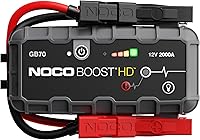
Choose the GB70 when your diesel fits its limit and a lighter pack matters. It supplies 2000 peak amps, and NOCO rates it for diesel engines up to 6.0L.
At 5 lb, it's easier to carry between compatible vehicles than the GB150. Its IP65-rated housing and 400-lumen light also fit roadside use.
Skip it for a larger diesel, even if its gasoline engine allowance appears generous. Both NOCO models include spark-proof and reverse polarity protection, but you still need to identify the terminals correctly.
Oxilam 6000A: for engines beyond the NOCO limits here
Consider the Oxilam when your compatible diesel exceeds the NOCO engine limits above. OXILAM rates it at 6000 peak amps and for diesel engines up to 12L.
Its battery-status display helps you check readiness, and OXILAM instructs users to have more than 50% charge before starting. The USB outputs and LED light add roadside uses, but charging devices draws from your emergency reserve.
Skip it for a 24-volt system or an engine beyond its stated range. Don't choose it solely because its peak-amp number is highest; voltage, engine compatibility, temperature limits, and clamp access still decide suitability.
How do you prepare a diesel truck for a jump start?
Park safely, shut off electrical loads, and inspect the batteries and cables before connecting. Set the parking brake and put the transmission in park or neutral as the truck manual directs.
Turn off lights, climate controls, and plugged-in accessories. Remove metal jewelry, wear eye protection, and keep flames, smoking materials, and sparks away from batteries.
Don't jump a battery that is cracked, leaking, swollen, visibly damaged, or possibly frozen. Loose terminals, damaged cables, or a battery that won't stay securely mounted also need attention before proceeding.
Find the approved jump points and confirm that the clamps can grip them securely. Position the pack on a stable surface where it can't fall into the engine bay, and route cables clear of belts, fans, and hot parts.
If using another vehicle, confirm compatibility and follow both vehicle manuals. Don't let the vehicles touch, and don't assume the donor engine should be running.
How do you connect a jump starter to a diesel truck?
Connect to the truck's designated points in the order required by both manuals. Remote jump posts may be the approved connection points even when the batteries are accessible.
Portable steps for jump starting a diesel truck
Use this sequence alongside the instructions for your truck and pack. If either manual specifies a different procedure, follow those instructions.
- Switch off the ignition and accessories, and leave the pack off while making connections unless its instructions say otherwise.
- Attach the red clamp to the designated positive terminal or jump post.
- Attach the black clamp to the specified negative or ground point.
- Check that both clamps grip firmly and the cables clear moving parts.
- Activate the pack as instructed and confirm its ready indication.
- Follow the truck's normal starting sequence, including any wait-to-start indicator.
- Crank only within the limits given in both manuals.
- After a successful start, deactivate and disconnect the pack in the specified order.
Don't let the clamps touch each other or unintended metal surfaces. Never bridge batteries or change their wiring to make a source fit.
For more detail on pack controls and connection checks, read how to use a portable jump starter. Our explanation of how a jump starter works covers the role of polarity and current flow.
How long should you wait before starting?
Use the wait time and cranking limit in your equipment instructions. A portable pack isn't a charger that you simply leave connected until the battery recovers.
Complete any required activation step, then follow the truck's starting procedure. If it doesn't start, stop cranking and allow the required pause before another permitted attempt.
Repeated long attempts can drain the pack and overheat starting components. Don't use boost or override mode as a routine response to failure, since it may bypass safety protections.
What should you do after the truck starts?
Disconnect as instructed, secure the equipment, and arrange to check why the battery went flat. Keep hands and cables clear of moving parts during removal.
Once the pack is disconnected, protect the clamps and check that nothing remains in the engine bay before closing the hood. Follow the truck manual's advice for what to do next.
A successful start doesn't mean the battery is fully charged or healthy. Don't assume a short drive or idling will restore a deeply discharged battery.
Read whether a jump starter can charge a battery before choosing between another jump and proper recharging. Repeated flat batteries need the battery and charging system checked.
Recharge the portable pack after use and inspect its cables before storing it. Follow how to charge a jump starter for charging and storage basics.
Why might a diesel truck fail to start after a jump?
Separate a cranking problem from an engine that cranks normally but won't run. More starting power won't solve every fuel, electrical, or engine fault.
If cranking remains slow, shut down the source as instructed before checking clamp contact, charge level, and compatibility. Don't reposition live clamps or keep trying with a pack showing a fault.
If the engine cranks normally but won't start, repeated boosting is unlikely to address the cause. Follow the truck manual's troubleshooting guidance or arrange roadside assistance.
Stop immediately for hot cables, smoke, unusual smells, or sparks at a connection. Move away from smoking or burning equipment and seek emergency help when needed.
For equipment that must serve several larger vehicles, compare the best jump starters for trucks and SUVs by each engine's requirements.
Can cold weather affect a diesel truck jump start?
Cold weather can reduce available battery power while making the engine harder to crank. An engine-size allowance alone doesn't mean a pack suits your winter conditions.
Check the pack's operating, charging, and storage temperature limits. Follow its instructions for bringing a cold unit into the permitted range, and never use a flame or direct heater to warm it.
A deeply discharged battery can freeze more readily, so don't attempt a jump if freezing is possible. Read how cold weather affects a car battery for the warning signs and winter preparation.
Check pack charge before long trips and at the maker's storage interval. OXILAM recommends recharging its unit every 3 months during long periods without use.
Which approach should you choose to jump start a diesel truck?
Choose by voltage and diesel engine fit first, then by carrying weight and storage needs. That's the practical starting point for deciding how to jump start a diesel truck.
Choose the GB70 for a smaller compatible diesel when carrying weight matters. Choose the GB150 for its larger diesel allowance, or consider the Oxilam when your engine exceeds both NOCO limits here.
Use a donor vehicle only when the approved procedure and suitable cables are available. Call for help if the voltage or jump points are unclear, the battery is damaged, or the truck won't start within the permitted attempts.
Use the diesel truck jump starter guide to narrow your equipment choice before the next flat battery.
Frequently asked questions
Can you jump start a diesel truck with a portable jump starter?
Yes, if the portable jump starter matches your truck's electrical system voltage and covers its diesel engine size. The models here require a compatible 12-volt system.
Follow both manuals for connection and starting, and never connect to a battery that is cracked, leaking, swollen, damaged, or possibly frozen.
Do diesel trucks need two batteries to jump start?
Two batteries don't automatically mean you need two jump starters. What matters is the truck's system voltage, battery arrangement, and approved jump points.
Use the procedure in the owner's manual, and don't disconnect, bridge, or connect separately to batteries unless that procedure specifically directs you to do so.
Where do you connect jumper cables on a diesel truck?
Connect at the positive and negative or ground points identified in the truck manual. Some trucks have remote jump posts, and the specified negative connection may be away from the battery.
Follow the source instructions too, and keep both clamps and cables clear of fans, belts, and hot parts.
Why won't a diesel truck start after a jump?
A jump won't fix every starting fault. Poor connections, an unsuitable source, a damaged battery, or a starter problem can prevent cranking, while fuel or other engine faults can prevent starting despite normal cranking.
Stop after the allowed attempts and arrange professional diagnosis rather than repeatedly applying more power.