Can a Jump Starter Charge a Battery?
A portable jump starter can't recharge a car battery in place of a charger. It supplies starting power; use a compatible battery charger to restore or maintain charge.
On this page (9 sections)
- Can a jump starter charge a battery?
- What should you check before buying either tool?
- Who should choose the NOCO GENIUS5?
- When does the NOCO GENIUS10 make more sense?
- When is the NOCO Boost GB40 the right tool?
- How do you set up a battery charger correctly?
- What should you do after using a jump starter?
- What mistakes cause more battery trouble?
- Can a jump starter charge a battery, or should you buy a charger?
A portable jump starter can't recharge a car battery in place of a charger. It supplies a brief burst of starting power; a battery charger restores charge over time.
Choose the tool by what you need next: getting a stranded car running, recharging a low battery at home, or keeping a parked vehicle ready. A jump starter and charger can serve the same vehicle, but they solve different problems.
Can a jump starter charge a battery?
A standard portable jump starter is built to crank the engine, not complete a controlled battery recharge. Leaving its clamps connected longer does not turn it into a charger.
A charger controls its output through a charging routine suited to the battery. A jump starter delivers high current briefly, then you remove it according to its instructions.
A USB power-bank feature doesn't change that distinction. Charging a phone through a USB port is a different job from recharging the vehicle battery through the clamps.
For the electrical basics, read how a jump starter works. The practical difference is covered in jump starter vs. battery charger.
Can a car charge its battery after a jump start?
A running car can replenish battery charge if its charging system works and the battery can accept charge. How much returns depends on the battery's condition, discharge depth, and electrical demand.
Starting successfully doesn't prove the battery is fully charged or healthy. If you left the lights on overnight, plan a proper recharge rather than assuming the next short trip will replace everything lost.
What should you check before buying either tool?
Check the battery voltage, chemistry, and intended task before comparing power figures. A device must match the battery and vehicle, even if its name includes “charger” or “power bank.”
Read the battery label and vehicle manual to identify flooded lead-acid, AGM, gel, or another supported chemistry. LiFePO4 requires the correct charging mode; a lithium battery inside a jump starter doesn't guarantee compatibility with a lithium vehicle battery.
For a jump starter, check the supported engine size and fuel type. For a charger, check the supported battery capacity and allowed charging current.
Peak starting amps and charger amps describe different jobs, so don't compare them as if a larger number always means a better tool. Use the jump starter selection guide if emergency starting is your main need.
Who should choose the NOCO GENIUS5?
The NOCO GENIUS5 suits routine home charging and vehicle storage when you have an outlet and can allow time for charging. It's the sensible choice here for someone maintaining a compatible battery rather than seeking roadside starting help.
It supplies 5A and supports 6V and 12V lead-acid batteries, including AGM and gel, plus supported LiFePO4 batteries. Its supported charging capacity extends to 120 amp-hours.
A temperature sensor adjusts charging for ambient conditions, and its maintenance function suits a vehicle that sits between uses. Included clamps support temporary connections, while integrated eyelet terminals can make repeat connections easier where installation is allowed.
Skip it if your main problem is being stranded without AC power. Also choose another charger if your battery falls outside its supported capacity or charging requirements.
Don't buy it expecting an instant start from a deeply discharged battery. Its job is to add charge gradually.
When does the NOCO GENIUS10 make more sense?
The NOCO GENIUS10 suits larger compatible batteries and owners who recharge more often. Its higher charging output makes sense when a lower-current charger would keep the vehicle tied up longer.
It supplies 10A, supports charging batteries up to 230 amp-hours, and works with 6V and 12V lead-acid and supported LiFePO4 batteries. Like the smaller model, it includes temperature compensation and a maintenance function.
A higher current can shorten the main charging stage when the battery permits it. It won't guarantee half the total charging time, because charging slows as the battery approaches full.
Skip the GENIUS10 if your battery requires a lower charging current or your only goal is starting a car away from an outlet. A small battery doesn't automatically benefit from a larger charger.
Both GENIUS chargers include low-voltage charging and Force Mode options. Use those only under the manual's instructions; a battery that won't register normally needs inspection before you try to force charging.
When is the NOCO Boost GB40 the right tool?
The NOCO Boost GB40 suits drivers who want portable emergency starting help. Choose it for the car kit when you may need to start a compatible vehicle without another driver or a nearby outlet.
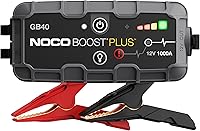
It's a 12V lithium jump starter with 1000A peak output. NOCO rates it for gas engines up to 6.0L and diesel engines up to 3.0L.
Its spark-proof and reverse-polarity protection help reduce connection mistakes, while the built-in flashlight helps you see the connection area. Those features still require you to follow the vehicle's approved jump-start procedure.
Skip it for engines outside its stated limits or if your actual need is overnight charging or storage maintenance. Its USB power-bank function can charge small devices, but it doesn't make the GB40 a car battery charger.
For other starting options, see the portable car jump starter buying guide.
How do you set up a battery charger correctly?
Start with the vehicle, battery, and charger instructions, then confirm the correct connection points and charging mode. Some vehicles have remote terminals or a required grounding point rather than a simple connection at both battery posts.
- Turn off the vehicle and accessories, and inspect the battery.
- Work in a ventilated area away from flames, sparks, and smoking materials.
- With AC power disconnected, attach the charger leads in the order and locations the manuals require.
- Select the correct voltage and battery chemistry, then connect AC power as directed.
- Watch for fault indicators and let the charger complete its routine.
- Disconnect AC power before removing the leads, following the specified removal order.
Never charge or jump-start a battery that is frozen, cracked, leaking, swollen, or otherwise damaged. Stop if it becomes unusually hot or develops a strong odor, and get professional help.
Route cables away from belts, fans, sharp edges, and places where they could be pinched. Don't close a hood over leads unless you can keep them clear of pressure and moving parts.
What should you do after using a jump starter?
After the engine starts, disconnect the jump starter as directed and address the discharged battery. Keep clamps and cables clear of moving engine parts throughout removal.
Use how to use a portable jump starter alongside the instructions for your exact equipment. If the vehicle won't start, follow the manual's attempt limits and cooling pauses instead of cranking repeatedly.
Recharge the jump starter after use, and check its charge periodically while stored. Using it to charge phones also draws from the reserve you may need for an emergency start.
Store it within its stated temperature limits, with clamps protected and cables undamaged. Follow how to charge a jump starter to keep the pack ready.
What mistakes cause more battery trouble?
The biggest mistake is treating a successful jump start as a completed recharge. A car can start with assistance and still have too little stored charge for the next start.
Don't rely on a fixed period of driving or idling. Charging conditions vary, and a deeply discharged battery deserves a compatible charger and a check for the cause.
Avoid choosing a charger by current alone or using a repair mode as a routine setting. Match the battery requirements first, and use special modes only where the instructions allow them.
Repeated jump starts also hide an unresolved problem. A battery that loses charge again may have deteriorated, the charging system may have a fault, or an electrical device may be drawing power while parked.
Repair and desulfation features can't repair physical damage or guarantee that an old battery will recover. Arrange a battery and charging-system check if slow cranking returns or the battery warning light stays on while driving.
Can a jump starter charge a battery, or should you buy a charger?
Buy a jump starter for emergency starting, and a charger for restoring or maintaining charge. A portable jump starter can't replace the controlled recharge your car battery needs after a deep discharge.
Choose the GB40 for compatible roadside starts, the GENIUS5 for routine home charging and storage, or the GENIUS10 for larger supported batteries and more frequent recharging. Keeping both types makes sense if you want roadside backup and a way to recharge at home.
If charging is your main need, compare compatible options in the best car battery charger guide before choosing by current alone.
Frequently asked questions
Can a jump starter recharge a dead car battery?
A portable jump starter supplies starting power rather than a full recharge. After the engine starts, a working vehicle charging system can add charge, but a deeply discharged battery may need a compatible charger.
Disconnect the jump starter as directed instead of leaving it attached to replenish the battery.
How long should I drive after jump-starting a car?
There is no drive time that guarantees a full recharge. Battery condition, discharge depth, electrical loads, and the vehicle's charging system all affect the result.
If the battery was deeply discharged, use a compatible charger rather than assuming a short drive or a period of idling has restored it.
Can I leave a jump starter connected to charge the battery?
No, disconnect a portable jump starter as its manual directs after starting the engine. Its clamps are for starting assistance, not an overnight charging connection.
Use a compatible smart charger to restore charge, or a charger with a suitable maintenance mode when the vehicle will sit unused.
Should I use a charger or jump starter for a dead battery?
Choose a jump starter for immediate starting help away from an outlet, or a charger when you have power and time to recharge. Check compatibility first and inspect the battery for damage.
If it loses charge again after charging, have the battery and vehicle charging system checked.