NOCO Boost GB40 Review: Worth It? (November 2026)
The NOCO GB40 is a good fit for drivers who want a compact emergency jump starter for a 12V vehicle within its engine limits. Choose it for engines up to 6.0L gas or 3.0L diesel; consider the alternatives below for larger engines or faster device charging.
On this page (9 sections)
- Who should buy the NOCO GB40?
- Is the GB40 powerful enough for your vehicle?
- What comes with the GB40, and where should you keep it?
- How should you prepare and connect the GB40?
- Can the GB40 replace a phone charger or work light?
- Which alternative suits a different buyer?
- How do you keep a jump starter ready?
- What mistakes should you avoid with the GB40?
- Should you choose the NOCO GB40?
The NOCO GB40 is a sensible emergency jump starter for a compatible everyday vehicle, especially if you want a pack that also provides a flashlight and backup phone power. Its main buying limit is engine fit: NOCO rates it for up to 6.0L gas or 3.0L diesel.
Buy it to handle an occasional flat-battery start, with a plan to keep it charged. Choose a larger-engine alternative if your vehicle falls outside that range, and choose a battery charger if your goal is to refill a battery over time.
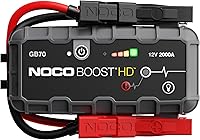
The alternatives in our Gooloo GP4000 review and NOCO GB40 vs GB70 comparison are useful starting points if your vehicle needs more coverage.
Who should buy the NOCO GB40?
The GB40 suits drivers building an emergency kit for a compatible car, SUV or other 12V vehicle. It makes the most sense when you want starting help without depending on a second vehicle being nearby.
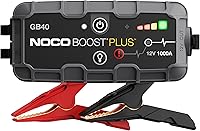
NOCO Boost GB40: Best for everyday car emergencies

- 1000A peak output
- Up to 6.0L gas and 3.0L diesel
- IP65-rated housing
- Power bank and flashlight
A compact emergency pack for drivers whose vehicles fit its gas or diesel engine limits. Connection safeguards, a flashlight and phone backup power make it useful beyond the starting task.
Pros
- Spark-proof connections and reverse polarity protection
- Rubberized IP65-rated housing
- Power bank and seven-mode flashlight
- Clamps, charging cable and storage bag included
Cons
- Engine range excludes larger diesels
- No air compressor included
Where the NOCO GB40 fits best
A commuter who occasionally leaves a light on is a clear buyer for this type of pack. So is someone who parks away from home and wants a way to address a weak starting battery without finding another driver with cables.
A shared household pack can work too, provided every vehicle falls within its limits. Check the largest engine first, and decide where the pack will live so it doesn't leave with one driver when another needs it.
The GB40 earns its 9.3 score here for its combination of engine coverage, connection safeguards and emergency tools. Those features fit this search well, but the score doesn't make it the right size for every vehicle.
Who should skip it
Skip the GB40 if your engine exceeds its range or your vehicle requires a different electrical system. A truck or RV label alone doesn't guarantee compatibility, since vehicles in those groups can have very different engines and starting systems.
Also skip it as the sole answer to a battery that repeatedly goes flat. A jump starter can help with the next start, but it cannot resolve a charging fault, a worn battery or an electrical drain.
Is the GB40 powerful enough for your vehicle?
Choose by vehicle voltage, fuel type and engine size first, then consider how much reserve you want. Peak amperage is useful context, but it isn't a complete measure of starting ability across different brands.
The GB40 has 1000A peak output. That figure describes peak current, not the current delivered throughout a start, and a pack with a larger peak number won't necessarily start every vehicle in every condition.
Diesel engines generally place different demands on a starter than similar-size gas engines. Match your fuel type to the correct limit rather than applying the gas figure to a diesel.
Leave room for demanding starts
Cold weather, a deeply discharged battery and poor electrical connections can make starting harder. If your vehicle sits near a pack's engine limit and winter use is a priority, compare models with broader engine coverage.
NOCO claims up to 20 starts per charge for the GB40. Treat that as an upper limit, not a plan for how many roadside attempts you'll get before recharging.
For a larger NOCO option, read the GB70 review and check its fit against your vehicle. Our guide on how to choose a jump starter explains how to weigh engine coverage against storage and charging needs.
What comes with the GB40, and where should you keep it?
The GB40 comes with heavy-duty clamps, a USB-C charging cable and a microfiber storage bag. It also has rubberized over-molding and an IP65-rated housing, and NOCO backs it with a 1-year limited warranty.
The pack measures 4.61 in deep x 8.19 in wide x 4.21 in high. Check the space you plan to use with room for the clamps and cable, rather than measuring for the unit alone.
A storage bag keeps the pieces together, but secure the kit so it can't slide around the cabin. Choose a spot you can reach when the battery is flat, especially if your usual storage area depends on powered access.
Keep the clamp jaws covered or secured as directed, and avoid packing sharp tools against the case. Water resistance doesn't make the pack suitable for immersion or mean you should connect it while wet.
How should you prepare and connect the GB40?
Charge the pack, read its instructions and find your vehicle's jump points before an emergency. Those steps remove guesswork when you're working beside the road or in poor light.
Some vehicles use remote jump points rather than direct access to the battery. Check the vehicle manual now, and make sure you can identify the positive point and approved ground location.
Before the first use
Charge the GB40 with suitable equipment and check its charge indicator. Keep the instructions with the kit, and make sure another driver who may use it knows where they are.
Inspect the pack, cables and clamps for damage. Don't use a swollen, cracked or otherwise damaged pack, and don't attempt to jump a battery that is frozen, leaking or visibly damaged.
During a jump-start attempt
Park safely, switch off the ignition and unnecessary accessories, and follow the connection order in both manuals. Keep cables away from belts, fans and other moving parts.
Make firm contact at the approved connection points. A clamp resting on a plastic cover, a loose jaw or heavy corrosion can prevent a useful connection even when the pack has charge.
The GB40's spark-proof connections and reverse polarity protection help reduce connection risks. They still require correct clamp placement and attention to the pack's status indicators.
Follow the permitted crank time and rest period instead of making repeated long attempts. Once the engine starts, disconnect and store the pack in the order NOCO specifies.
Our guide on how to use the NOCO GB40 walks through the setup. Keep the device and vehicle instructions as your reference for the exact procedure.
Can the GB40 replace a phone charger or work light?
The GB40 can provide backup device power and light for an emergency, but preserve its charge if you may need a jump. Regularly using it to refill electronics creates another task before it goes back in the car.
Its 100-lumen LED has 7 modes, including SOS and strobe. Use a steady mode for checking connections, and select signaling modes only when they suit the situation.
The built-in light is useful for locating equipment, but position the pack where its cables remain clear and secure. A separate light can be easier if you need both hands or want to keep the jump starter stationary.
NOCO states a 3-hour recharge time for the GB40. Allow time to refill it after use rather than returning it to storage with an unknown amount of charge.
A USB-C cable alone doesn't guarantee laptop compatibility or charging speed. If charging larger travel devices is a major reason for buying, the Wolfbox below offers a more relevant set of charging features.
Which alternative suits a different buyer?
Choose the GP4000 for broader engine coverage, Wolfbox for charging features, or GB20 for a dedicated smaller gas vehicle. None is a reason to replace the GB40 if its vehicle fit and features already meet your needs.
Gooloo GP4000: for larger engines and shared kits
GOOLOO rates the GP4000 for all gas engines and diesel engines up to 10.0L, with 4000A peak output. That broader range suits buyers covering a larger diesel or several different compatible vehicles.
It weighs 3.9 lb and comes with an EVA case, all-metal clamps, a USB-to-Type-C cable and a cigarette lighter socket adapter. Its dual USB outputs include one fast-charging port.
Choose it when engine coverage takes priority over carrying weight. Skip it if your only vehicle already fits the GB40 and you prefer a simpler emergency kit with less weight to move.
A wall charger isn't included, so arrange a suitable one before putting the pack into service. The Gooloo GP4000 review covers its role as a larger-engine alternative.
Wolfbox 4000A: for drivers who use the charging ports
The Wolfbox supports gas and diesel engines under 10L and pairs 4000A peak output with an LCD status display. Its 65W USB-C input and output are the main reasons to consider it over a jump-only buying decision.
It weighs 3 lb and includes a PD65W charger. WOLFBOX states a full recharge time of 1.3 hours, making it a useful option when you want to refill the pack between trips.
Choose it for travel that includes charging compatible laptops, phones or tablets. Check your device's power requirements and cable compatibility before relying on it as your travel power source.
Skip it if it will spend almost all its time stored for emergencies and you won't use the added charging features. Those extras still need a charge-management plan if starting the car remains the priority.
NOCO GB20: for a dedicated smaller gas vehicle
The GB20 offers 500A peak output and is rated for gas engines up to 4.0L. It shares the GB40's spark-proof connections, reverse polarity protection, power-bank function and seven-mode flashlight.
Choose it for a compatible smaller gas vehicle when you don't need wider engine coverage. It makes less sense as a household pack if another vehicle needs diesel support or exceeds its gas-engine limit.
Don't assume a lower-output model will take up much less space. The dimensions match the GB40's, so engine fit is the stronger reason to choose between them.
The broader NOCO vs Gooloo comparison can help if you're choosing between brands rather than these specific features.
How do you keep a jump starter ready?
Check its charge on a routine schedule and recharge it after use. A pack stored out of sight needs deliberate attention, even if you haven't used it to start a vehicle.
Follow NOCO's charging and storage instructions rather than borrowing another brand's interval. GOOLOO specifically recommends charging an idle GP4000 every 2–3 months, but that advice doesn't set the GB40's schedule.
Avoid prolonged heat, direct sun and storage outside the temperatures allowed in the manual. A glove box may be convenient, but choose another location when conditions there exceed the pack's storage limits.
Inspect the cable insulation, clamp action and case when you check the charge. Keep the ports clean and dry, and replace damaged equipment rather than counting on it during the next breakdown.
For charging setup and habits, see how to charge a jump starter.
What mistakes should you avoid with the GB40?
Don't confuse a jump starter with a battery charger or a repair. Its job is to supply a short burst for starting, not to restore a depleted vehicle battery fully.
Avoid these common errors:
- Choosing by peak amps alone. Confirm voltage and engine fit before comparing extra features.
- Packing it without charging it. Check the indicator before trips and after using the light or power bank.
- Ignoring a fault signal. Stop and resolve the warning instead of repeatedly trying to crank.
- Using boost controls casually. The GP4000 and Wolfbox have boost functions; use any such mode only as its manual directs.
- Making repeated long attempts. Follow crank limits and rest periods to avoid overheating equipment.
- Assuming one successful start solves the problem. Arrange proper battery recharging and investigate repeated failures.
A vehicle that won't crank may have a battery or connection issue, but other faults can also prevent starting. If the engine cranks normally and doesn't fire, more jump-start attempts may not address the cause.
Should you choose the NOCO GB40?
Choose the NOCO GB40 for occasional starting help in a compatible vehicle, with backup lighting and phone power in the same kit. Before ordering, confirm engine fit and choose an accessible storage spot.
Pick the GP4000 when larger-engine coverage matters most, or the Wolfbox when you'll use its faster charging and display. Choose the GB20 for a suitable smaller gas vehicle when you don't need the GB40's broader range.
If you're deciding between the two smaller NOCO packs, use our NOCO GB20 vs GB40 comparison. The useful choice is the pack that fits your vehicle and that you'll keep charged and ready.
Frequently asked questions
What engines can the NOCO GB40 jump start?
The NOCO GB40 is rated for gas engines up to 6.0L and diesel engines up to 3.0L in compatible 12V vehicles. Confirm both fuel type and engine size before buying.
Battery condition, charge level and weather affect the demands of a start, so engine size is only part of the decision.
Does the NOCO GB40 have reverse polarity protection?
Yes, the GB40 has reverse polarity protection and spark-proof connections. These safeguards help reduce connection errors, but you must still identify the correct terminals and follow both manuals.
Stop if the pack shows a fault, the battery appears damaged or you're unsure where the vehicle's approved jump points are.
Can the NOCO GB40 charge a phone?
Yes, the GB40's integrated power bank can supply emergency power to smartphones, tablets and other devices. Keep enough charge available for its main job of starting the vehicle.
NOCO's stated 3-hour recharge time applies to refilling the jump starter, not to how quickly it charges a phone.
How does the GB40 compare with the GB20?
The GB40 offers broader engine coverage, including a diesel range, while the GB20 is rated for gas engines up to 4.0L. Choose the GB20 for a compatible smaller gas vehicle.
Choose the GB40 when you need its larger engine range or plan to cover more than one suitable vehicle.