NOCO Boost GB70 Review: Worth It? (November 2026)
Choose the NOCO GB70 for a compatible 12V vehicle when you need its larger engine range: up to 8.0L gas or 6.0L diesel. Pick the GBX45 for faster recharging within lower engine limits, or the GB150 for larger engines.
On this page (10 sections)
- Who should buy the NOCO GB70?
- How much starting power do you need?
- How do you prepare the GB70 before a roadside emergency?
- What do the GB70's safety features protect against?
- Which GB70 extras are useful on the road?
- GB70 vs GBX45 vs GB150: which fits your routine?
- Should you choose a jump starter with an air compressor?
- How should you charge and store the GB70?
- Which mistakes should you avoid with the GB70?
- Is the NOCO GB70 the right choice for you?
The NOCO GB70 suits drivers of larger 12V vehicles who want a dedicated jump starter with useful roadside extras. Buy it for the engine range you need, then check that its size and charging routine fit your car.
Its main trade-off is simple: you get a wider engine range than the GBX45, but slower recharging and more weight to carry. The GB150 serves larger engines, while the Wolfbox MV24A adds tire inflation.
Who should buy the NOCO GB70?
Choose the GB70 for a larger everyday vehicle when your engine needs more capacity than the GBX45 supports. It also makes sense as a shared emergency tool if every vehicle you plan to help falls within its limits.
NOCO Boost GB70: Best for larger everyday vehicles

- 2000A peak current
- Up to 8.0L gas and 6.0L diesel
- 5 lb
- IP65-rated housing
A fit for drivers who need a larger engine range without moving to the heavier GB150. Its power bank and built-in light also help during roadside stops.
Pros
- Rated for engines up to 8.0L gas and 6.0L diesel
- Spark-proof and reverse-polarity protection
- IP65-rated housing with rubberized over-molding
- Power bank and 400-lumen flashlight
Cons
- 5 lb weight adds to an emergency kit
- 6-hour recharge requires planning
- No built-in tire inflator
A truck badge or SUV body style doesn't settle the choice. Find the actual engine size and fuel type in your vehicle documents, and confirm that the starting system is compatible.
The GB70 is also worth considering if you want a dedicated starter and already carry a separate tire inflator. That setup lets you choose each tool for its own job.
Skip it if your main need is fast USB-C replenishment for a smaller vehicle. The GBX45 better suits that routine, provided your engine falls within its lower limits.
Don't buy the GB70 to solve a battery that goes flat every few days. Repeated jump starts call for a battery and charging-system check, plus a search for anything draining power while parked.
Does the NOCO GB70 fit your emergency kit?
Plan around the whole kit, including clamps and cables, rather than the unit alone. The GB70 measures 7.4 x 3.7 x 12.6 in and weighs 5 lb.
Measure the intended compartment before ordering, and choose a secure spot you can reach with the vehicle switched off. A loose pack under luggage is harder to retrieve during a roadside stop.
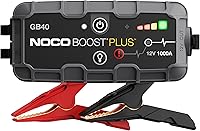
For another model to consider, read our NOCO GB40 review. The GB40 vs GB70 comparison helps narrow that choice around your vehicle and storage needs.
How much starting power do you need?
Choose by system voltage and engine range first, then consider peak current. The GB70 supplies 2000A peak current and is rated for engines up to 8.0L gas or 6.0L diesel.
Those are separate limits: a diesel engine needs to fit the diesel range. Don't use the gasoline figure to judge a diesel vehicle.
Peak amps alone don't show how a pack will behave in every starting situation. Cold conditions, battery condition, clamp contact and the pack's remaining charge all affect a jump-start attempt.
NOCO claims up to 40 starts per charge, but that isn't a schedule for recharging. A demanding start or repeated unsuccessful attempts can use more energy than an easy start.
If you're buying for several vehicles, size the pack around the most demanding compatible vehicle you intend to help. Use our jump starter sizing guide to understand current figures without choosing by the largest number alone.
How do you prepare the GB70 before a roadside emergency?
Charge it, read both manuals and locate the vehicle's connection points before you need a jump start. Preparation matters most when the battery is hard to reach or the vehicle uses remote jump terminals.
The GB70 includes heavy-duty clamps, a USB-C charging cable and a microfiber storage bag. Check NOCO's charging-equipment requirements so you have a suitable power source ready.
A useful first setup takes a few deliberate steps:
- Confirm the vehicle's starting-system voltage and approved jump-start procedure.
- Find the positive terminal and the negative connection point specified by the vehicle manufacturer.
- Read the GB70's indicator meanings, operating steps and limits on start attempts.
- Charge the pack as directed and check that its cables and clamps are undamaged.
- Store the complete kit securely, with the instructions easy to find.
Don't assume a familiar engine bay uses the same connection points as your previous car. Some vehicles place the battery away from the approved jump terminals.
Our portable jump starter use guide explains general precautions. Use the GB70 and vehicle manuals for the exact connection order, waiting periods and removal steps.
What do the GB70's safety features protect against?
The GB70 has spark-proof and reverse-polarity protection, which help reduce connection errors. You still need to identify the correct terminals and follow the approved procedure.
Before connecting anything, switch off the vehicle and accessories as directed, and inspect the battery area. Stop if the battery is leaking, swollen, visibly damaged or suspected to be frozen.
Keep cables clear of fans, belts and other moving parts. Set the pack on a stable surface where it cannot fall or pull the clamps loose.
If the unit shows an error, stop and check the instructions. Don't keep moving clamps around while the output is active or guess at a control you don't understand.
A poor connection can also prevent a start. Clamp onto the approved clean metal contact points, and seek help if corrosion or damage prevents a secure connection.
Which GB70 extras are useful on the road?
The flashlight and USB power bank help with the tasks around a breakdown. Use them with your next starting attempt in mind, since they draw energy from the same pack.
The built-in light provides 400 lumens and 7 modes, including SOS and strobe. A steady mode helps you see the connection area; emergency modes don't replace proper roadside precautions.
The power bank can charge phones and tablets, which is useful when you need to call for help. If the pack is your only starting backup, avoid using it for routine device charging without checking the remaining charge.
Its IP65-rated housing has rubberized over-molding, and NOCO describes the design as protecting against water, dust and impact. That doesn't make it suitable for immersion or careless storage around fluids.
Keep the unit and accessories dry before packing them away. NOCO backs the GB70 with a 1-year limited warranty, so retain your proof of purchase and follow its care instructions.
GB70 vs GBX45 vs GB150: which fits your routine?
Choose the GBX45 for quick replenishment, the GB70 for its middle engine range, or the GB150 for larger engines. A higher-output model is useful when your vehicle needs it, but adds little buying value if the smaller option already fits your routine.
| Model | Peak current | Gas engine limit | Diesel engine limit | Recharge time |
|---|---|---|---|---|
| NOCO Boost GB70 | 2000A | 8.0L | 6.0L | 6 hours |
| NOCO Boost GBX45 | 1250A | 6.5L | 4.0L | NOCO claims 48 minutes via USB-C Power Delivery |
| NOCO Boost GB150 | 3000A | 9.0L | 7.0L | 7 hours |
Choose the GBX45 for a smaller vehicle and frequent USB-C use
The GBX45 suits drivers who want one pack for emergency starting and regular device charging. Its 60W USB-C port supports input and output, including power for compatible laptops.
NOCO says it can gain enough charge for a jump start in 5 minutes, even from depleted. Have suitable USB-C Power Delivery equipment ready if those charging speeds are central to your choice.
Skip the GBX45 if your engine exceeds its limits. NOCO also claims up to 6 starts per charge, so don't choose it on the assumption that its reserve matches the larger Boost models.
Choose the GB150 when your engine needs the larger range
The GB150 is the step up for an engine beyond the GB70's limits but within the GB150's range. Its 7.5 lb weight is easier to justify for that need than for a small commuter car.
NOCO claims up to 80 starts per charge, and the unit includes a 500-lumen flashlight. Those features suit a shared vehicle kit, but they don't remove the need to recharge after use.
Skip the GB150 if carrying weight and storage space are your main concerns. Buy the larger model because of a clear vehicle requirement, rather than treating extra output as an automatic upgrade.
Should you choose a jump starter with an air compressor?
Choose a combined unit if roadside tire top-ups are part of your plan. The GB70 has no built-in inflator, so it suits drivers who already have one or prefer separate tools.
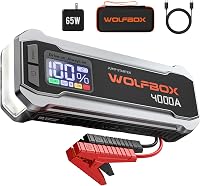
The Wolfbox MV24A combines a 4000A jump starter with a 160 PSI compressor. WOLFBOX rates it for compatible 12V vehicles with engines up to 10L gas or diesel.
Its 65W USB-C port supports charging, and an EVA carrying bag holds the kit. A charging adapter isn't included, so arrange a compatible one before relying on it.
The main unit measures 9.39 x 5.28 x 2.16 in. Leave room for the hose, clamps and other accessories when planning trunk storage.
Use the vehicle's recommended tire pressure, usually shown on its placard, rather than the compressor's maximum pressure. Inflation can address low pressure, but it cannot repair tire damage.
Skip this combined approach if you want a starter kept ready solely for battery emergencies. Tire inflation uses the shared battery, so check charge after compressor use.
See our best jump starter with air compressor guide for more combined options. Our NOCO vs Gooloo guide helps if you're also comparing brands.
How should you charge and store the GB70?
Recharge after use and check the pack before long trips, rather than leaving it untouched until the next flat battery. NOCO gives a 6-hour recharge time, so build that delay into your plans.
Follow the manual's storage temperatures and charge-check schedule. A calendar reminder helps if the unit spends most of its time in a vehicle.
Keep the clamps, cables and bag together, and inspect them during charge checks. Look for damaged insulation, loose parts or signs that the pack needs service.
Avoid storage where the unit can slide, be crushed by cargo or contact liquids. Bring it indoors when vehicle conditions fall outside NOCO's storage limits.
For more charging guidance, read how to charge a jump starter. Check the device's charge indicators before disconnecting it and putting the kit away.
Which mistakes should you avoid with the GB70?
Don't use repeated jump starts as a substitute for fixing the cause of a flat battery. A successful start gets the engine running, but doesn't prove the battery can hold a charge.
A jump starter also doesn't perform the same job as a battery charger. Our jump starter vs battery charger guide explains which tool fits a discharged battery that needs sustained charging.
Avoid these common errors:
- Buying by peak amps alone. Check engine type, engine size and system compatibility first.
- Ignoring a failed attempt. Stop at the manual's limit and reassess instead of cranking repeatedly.
- Forgetting accessory use. Phone charging and lighting reduce the energy available for starting.
- Packing away a depleted unit. Recharge before returning it to the emergency kit.
- Assuming every no-start is battery-related. Fuel, starter and other faults need a different fix.
If the engine starts but the vehicle soon loses power again, arrange diagnosis. Carrying a jump starter is useful backup; it doesn't make an unresolved electrical fault dependable.
Is the NOCO GB70 the right choice for you?
Buy the NOCO GB70 when its engine range matches a real need and you can keep it charged between trips. It fits a larger everyday vehicle or a shared kit better than a buyer whose main priority is frequent USB-C use.
Pick the GBX45 for a smaller compatible engine and faster replenishment. Move to the GB150 for a larger engine, or choose the Wolfbox when tire inflation belongs in the same tool.
Before ordering, confirm vehicle compatibility, measure the storage spot and plan the charging setup. If you're still weighing the wider category, use our portable jump starter buying guide to make the final choice.
Frequently asked questions
What size engines can the NOCO GB70 jump start?
The NOCO GB70 is rated for gasoline engines up to 8.0 liters and diesel engines up to 6.0 liters in compatible 12V vehicles. Confirm both engine size and starting-system voltage before buying.
A vehicle above either engine limit needs a jump starter rated for that application.
How many starts can the GB70 provide on one charge?
NOCO claims up to 40 starts per charge for the GB70. Your usable number depends on the vehicle, battery condition, temperature and charge remaining in the pack.
Recharge after use rather than counting attempts and assuming the unit still has enough energy for the next emergency.
How long does the NOCO GB70 take to recharge?
NOCO gives a 6-hour recharge time for the GB70. Check the manual for the required charging equipment and charge indicators before setting it aside.
If quick replenishment matters more than the GB70's engine range, the GBX45 offers a claimed 48-minute recharge with suitable USB-C Power Delivery equipment.
How much space does the NOCO GB70 need?
The NOCO GB70 measures 7.4 x 3.7 x 12.6 inches and weighs 5 lb. Leave extra room for its clamps, cables and storage bag, then secure the kit against movement.
Our NOCO GB40 vs GB70 guide can help you decide whether the larger model suits your vehicle.