Do Portable Jump Starters Really Work?
Yes, portable jump starters work for many vehicles with a discharged battery if the pack is charged, sized for the engine, and connected correctly. They won't repair a damaged battery or fix other causes of a no-start.
On this page (9 sections)
- Do portable jump starters work on a dead car battery?
- How does a portable jump starter start a car?
- How do you choose a jump starter that will work?
- Which portable jump starters suit different vehicles?
- How do you set up and use a portable jump starter?
- What mistakes make a jump starter fail?
- How do you keep a jump starter ready?
- When should you stop and call for help?
- Do portable jump starters work for your car?
Yes, portable jump starters work when a discharged battery can't supply enough current to crank an otherwise working engine. You'll need a charged pack that matches your vehicle and firm connections at the correct points.
Their main benefit is independence: you can attempt a start without finding another driver and positioning a second vehicle nearby. Their limit is just as clear: extra starting power cannot repair a fault.
Do portable jump starters work on a dead car battery?
They often work on a discharged battery, but “dead” doesn't tell you whether the battery is simply low or damaged. Leaving the lights on can drain an otherwise usable battery; an internal battery fault needs a different solution.
A pack supplies a brief burst of current to help the starter motor turn the engine. It doesn't need to fully recharge the car battery before the engine can start.
Slow cranking or clicking can fit a low-battery problem, but neither proves the cause. Loose terminals, damaged cables, and starter faults can produce similar symptoms.
If the engine cranks at its usual speed but won't fire, more starting current may not help. Follow the pack's attempt limits and seek help rather than repeatedly cranking.
How does a portable jump starter start a car?
A portable jump starter feeds current into the starting circuit through its clamps. It temporarily adds the power the vehicle battery can't provide on its own.
Once the engine runs, the vehicle's charging system takes over, provided that system works. A brief drive or a few minutes of idling may leave a deeply discharged battery well short of a full charge.
Our explanation of how a jump starter works covers that power flow. For deciding which tool you need afterward, see jump starter vs battery charger.
How do you choose a jump starter that will work?
Choose by vehicle voltage and engine coverage first, then consider storage space and upkeep. A large peak amp number doesn't replace checking the unit's stated gas and diesel engine limits.
- Confirm voltage: All 3 products below are for compatible 12V vehicles, not 24V systems.
- Check engine size and fuel: Diesel and gasoline limits differ, even on the same pack.
- Consider the hardest use: A larger engine in winter demands more than a small engine in mild weather.
- Check access: Find your vehicle's approved jump points and make sure you can attach clamps securely.
- Plan storage: Pick a pack you'll keep charged and carry in a secure, accessible place.
If your engine sits near a pack's stated limit and winter starts are a concern, consider a model with broader engine coverage. That gives you a more suitable starting point, though it doesn't guarantee success.
For sizing help, read how many amps you need for a jump starter. Our guide to cold weather and car batteries explains why winter makes starting harder.
Which portable jump starters suit different vehicles?
The GB40 suits smaller compatible engines, the GB70 covers larger engines, and the GP4000 offers the broadest stated engine coverage here. Choose around your vehicle and carrying needs, rather than buying the highest peak number by default.
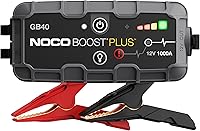
Do portable jump starters work for everyday cars? NOCO Boost GB40
The NOCO Boost GB40 fits drivers who want a compact emergency pack for a compatible car, motorcycle, or smaller SUV. It's rated for gas engines up to 6.0L and diesel engines up to 3.0L, with 1000 amps of peak output.
Spark-proof connections and reverse-polarity protection help reduce connection mistakes. Its IP65-rated housing and rubberized outer covering also suit an emergency kit that may face dust and splashes.
Choose it if the engine limits cover your vehicle and compact storage matters. Skip it for engines beyond those limits, and don't assume that every truck fits just because the pack supports some trucks.
NOCO Boost GB70 for larger engines
The NOCO Boost GB70 is the better fit for drivers whose engines exceed the GB40's range. It covers gas engines up to 8.0L and diesel engines up to 6.0L, with 2000 amps of peak output.
It weighs 5 lb, so plan a secure storage spot instead of assuming it will fit a crowded glove box. Its 400-lumen light can help you see connection points in the dark, though you should locate them before an emergency.
Choose it for compatible larger engines when the extra weight is acceptable. Skip it if you mainly need a smaller pack for a modest engine, or if your vehicle exceeds its coverage.
Gooloo GP4000 for large-engine coverage
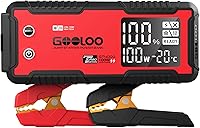
The Gooloo GP4000 suits drivers seeking broad engine coverage plus device-charging ports. GOOLOO rates it for all gasoline engines and diesel engines up to 10.0L in compatible 12V vehicles, with 4000 amps of peak output.
Its boost button supports very low battery voltage, but read that procedure before you need it. A mode that forces output requires care and is never permission to jump a damaged battery.
The included EVA case helps keep the pack and cables together, while dual USB outputs serve phones and other devices. A wall charger isn't included, so arrange a suitable charging source before putting it in the car.
Skip it if you want a pack with a wall charger supplied, or would buy it mainly to force repeated starts without diagnosing the battery.
For a broader view of pack types and features, use our complete portable jump starter buying guide.
How do you set up and use a portable jump starter?
Read both manuals before connecting, because connection points, indicator lights, and start procedures vary. Some vehicles have remote jump points instead of using both battery terminals directly.
- Park safely, apply the parking brake, and switch off the ignition and accessories.
- Check the battery for cracks, leaks, swelling, unusual heat, or signs it may be frozen.
- Confirm the pack has sufficient charge and identify the approved connection points.
- Connect the clamps in the specified order, keeping them apart and clear of moving parts.
- Follow the pack's ready signal, starting limits, and required pauses.
- After the engine starts, disconnect as directed and secure the equipment.
Protection features don't replace correct connections. If the pack signals a fault, stop and understand the warning before trying again.
If you can't reach a connection point safely or secure a clamp, call for help. Our guide to using a portable jump starter explains the general process in more detail.
What mistakes make a jump starter fail?
Low pack charge and poor connections are 2 preventable reasons a suitable unit may fail to help. Buying a powerful pack won't compensate for leaving it discharged or attaching a clamp loosely.
Check that each clamp grips the approved metal contact firmly. Heavy corrosion or damaged cables need attention; repeatedly moving clamps while the pack is active isn't a sound workaround.
Avoid long, repeated cranking attempts, which can overheat equipment and drain the pack. Follow the manual's rest periods and maximum number of attempts.
Don't activate boost mode just because a normal attempt failed. First rule out a warning, poor connection, insufficient pack charge, or an unsafe battery.
Also remember that using the pack to charge phones reduces its stored energy. Replenish it before relying on it for roadside starting.
How do you keep a jump starter ready?
Keep it charged, dry, and within its storage temperature limits. A pack forgotten in a vehicle for months deserves a charge check before a long trip.
Inspect the case, cables, and clamps for damage, and secure the pack so it can't slide around. Keep loose metal objects away from its connections and avoid storage in direct sun.
GOOLOO recommends charging an idle GP4000 every 2–3 months; follow the relevant manual for other models. Recharge after use and make charge checks part of your routine vehicle checks.
Use an appropriate charging source and allow the pack to reach a permitted charging temperature first. See how to charge a jump starter for a practical charging routine.
When should you stop and call for help?
Stop if the battery looks unsafe, the pack reports a fault you can't resolve, or the engine won't start within the allowed attempts. A jump starter cannot fix the starter, alternator, fuel system, or damaged wiring.
A successful jump shows that extra current helped, not that the battery is healthy. Repeated discharge, warning lights, or an engine that dies again call for a battery and charging-system check.
If the vehicle starts, arrange a proper recharge and find the reason it went flat. Keeping a pack nearby is useful backup, but repeated jump starts aren't a repair plan.
Do portable jump starters work for your car?
Portable jump starters work best as backup for a discharged battery in a compatible vehicle. Buy the GB40 for compact storage within its engine limits, the GB70 for larger-engine coverage, or the GP4000 when its broader range and charging ports fit your needs.
Make the pack useful before an emergency: charge it, locate the vehicle's jump points, and read the connection procedure. Use how to use a portable jump starter for the next steps, or how a jump starter works to understand its limits.
Frequently asked questions
Do portable jump starters really work?
Yes, portable jump starters work when a compatible vehicle needs extra current to crank because its battery is discharged. The pack must have enough charge and a firm connection at the correct points; it cannot fix a faulty starter, damaged battery, or another cause of a no-start.
How long should I leave a portable jump starter connected?
Follow the unit's manual for connection time, starting attempts, and removal after the engine starts. There is no single waiting period that applies to every pack; watch its status indicators, allow any required cooling time, and disconnect in the order specified by the instructions.
Can a portable jump starter start a completely dead battery?
Sometimes, if the battery is deeply discharged but otherwise safe to jump and the pack supports that situation. Very low voltage may prevent automatic battery detection; use a boost or override mode only as directed, and never use it to bypass a warning you haven't understood.
Will a portable jump starter work in cold weather?
Yes, it can work in cold weather within its stated operating limits, but cold makes the engine harder to crank and reduces battery performance. Keep the pack charged, follow its temperature limits, and never attempt to jump a frozen battery, even if the pack supports low-temperature use.