6 Best Jump Starter for Trucks and SUVs (November 2026)
The best jump starters for trucks and SUVs include the NOCO Boost GB70 for mixed vehicle households, the Wolfbox 4000A for larger diesel pickups, and the Wolfbox MV24A for roadside tire top-ups.
On this page (9 sections)
- Which jump starter fits trucks and SUVs best?
- The best jump starters for trucks and SUVs
- How should you size a truck jump starter?
- Which features matter for a truck emergency kit?
- How should you set up a new truck jump starter?
- How do you use a truck jump starter without common mistakes?
- How do you keep a jump starter ready through heat and cold?
- What should you do after the truck needs a jump?
- Which truck jump starter should you choose?
The NOCO Boost GB70 is the best jump starter for trucks and SUVs within its engine range, thanks to its connection protection and rugged housing. Larger diesel pickups, frequent device charging and tire top-ups give the other picks clear roles.
Choose by engine size, fuel type and battery-system voltage before comparing peak amps. All 6 picks are 12V models, so none belongs on a 24V system.
For a broader overview, read our portable jump starter buying guide. Our best jump starter for diesel trucks roundup focuses on diesel needs.
Our picks at a glance
-
1

-
2
-
3

Which jump starter fits trucks and SUVs best?
The GB70 is the strongest all-around choice here for compatible vehicles, while the other packs solve more specific needs. Start by ruling out models that don't cover your engine, then compare the features you'll use.
For a household with a pickup and an SUV, sharing one suitable pack can make sense. If the vehicles have different fuel types, check both engine limits rather than assuming the larger displacement is the only one that matters.
We compared engine coverage, connection protection, charging, carrying weight and roadside functions. Those differences are more useful than treating the largest peak-amp number as an automatic winner.
| Product | Best for | Peak output | Engine fit | Weight | Our score |
|---|---|---|---|---|---|
| NOCO Boost GB70 | mixed vehicle households | 2000A | Up to 8.0L gas, 6.0L diesel | 5 lb | 8.8 |
| Wolfbox 4000A | larger diesel pickups | 4000A | Under 10L gas and diesel | 3 lb | 8.5 |
| Wolfbox MV24A | roadside tire top-ups | 4000A | Up to 10L gas and diesel | 8.3 | |
| NOCO Boost GBX45 | smaller truck engines | 1250A | Up to 6.5L gas, 4.0L diesel | 8.1 | |
| Gooloo GT4000S | truck camping trips | 4000A | Up to 12L gas, 10L diesel | 8.0 | |
| Clore JNC660 | garage truck maintenance | 1700A | 7.6 |
The best jump starters for trucks and SUVs
Choose the highest-ranked model that fits both your vehicle and your routine. An inflator, faster recharge or longer cables can be worth more to you than the features on the first pick.
Each recommendation below explains its strongest use and the reason to choose something else.
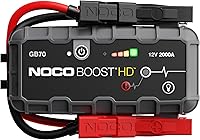
NOCO Boost GB70: Best for mixed vehicle households
- 2000A peak power
- Up to 8.0L gas and 6.0L diesel
- Spark-proof and reverse polarity protection
- IP65-rated housing
A useful choice for households sharing one emergency pack across compatible trucks, SUVs and smaller vehicles. Connection protection and a rubberized housing support that role.
Pros
- Separate gas and diesel engine limits
- Spark-proof and reverse polarity protection
- IP65-rated housing
Cons
- Diesel engine limit excludes larger pickups
- 6-hour recharge time
The NOCO Boost GB70 suits a household that wants one pack for compatible trucks, SUVs and smaller vehicles. It covers engines up to 8.0L gas and 6.0L diesel, with 2000A peak output.
Its spark-proof and reverse polarity protection help guard against connection errors. You still need to identify the correct terminals and follow the vehicle's approved connection procedure.
The rubberized, IP65-rated housing is useful around dusty equipment and roadside splashes. Keep it dry during storage, and don't treat water resistance as permission to leave it exposed in a truck bed.
At 5 lb, it's a practical choice when the pack mostly stays in one emergency kit. NOCO claims up to 40 starts per charge, but keeping it charged matters more than planning around that maximum.
Skip it if your diesel exceeds its engine limit or you need rapid recharging between uses, since a full recharge takes 6 hours. Read the diesel truck jump-starting guide alongside your vehicle's manual before putting it into service.
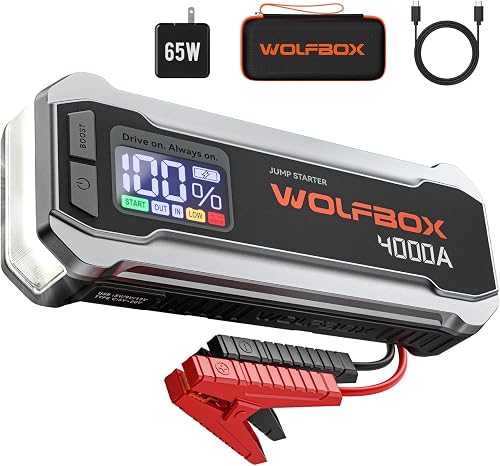
Wolfbox 4000A: Best for larger diesel pickups
- 4000A peak power
- Under 10L gas and diesel
- 65W USB-C charging
- LCD status display
Choose this for a larger compatible diesel pickup when you want a portable pack without an inflator. The included PD65W charger makes its fast charging easier to use.
Pros
- Covers gas and diesel engines under 10L
- LCD status display
- PD65W charger included
Cons
- Does not cover engines of 10L or larger
- No built-in tire inflator
The Wolfbox 4000A is a better match for a larger compatible diesel pickup when you want a portable pack without a compressor. Wolfbox rates it for gas and diesel engines under 10L, with 4000A peak output.
That wording matters: an engine at the boundary doesn't meet an under-10L limit. Check displacement rather than relying on the truck's model badge.
The 3 lb weight makes this an appealing option if you move the pack between vehicles. Its LCD shows status, so you can check the unit before packing it for a trip.
Wolfbox includes a PD65W charger and claims a full recharge in 1.3 hours. Having that charger in the box makes the charging feature easier to use without assembling a separate setup.
Choose this over the inflator model if you already carry a tire pump and want a simpler kit. Skip it for an engine outside its range, and follow Wolfbox's warning against reversed clamp polarity.
Wolfbox MV24A: Best for roadside tire top-ups
- 4000A peak power
- Up to 10L gas and diesel
- 160 PSI air compressor
- 65W USB-C charging
This combines battery-starting help with an inflator for pickup tires and smaller vehicles. It suits drivers who want both tools together and will keep enough charge available for emergencies.
Pros
- Jump starter and compressor in one unit
- Pickup tire inflation capability
- EVA carrying bag included
Cons
- Charging adapter not included
- Inflator intended for pickups and smaller vehicles
The Wolfbox MV24A suits drivers who want battery-starting help and tire top-ups in one kit. It combines 4000A peak output with engine coverage up to 10L gas or diesel.
The compressor's maximum pressure is 160 PSI, but inflation speed is the more useful measure for a pickup. Wolfbox claims it can raise a 315/70 R17 tire from 30 PSI to 36 PSI in 2 minutes 30 seconds.
That example describes a top-up, so don't use it to estimate how long a fully deflated tire will take. Wolfbox describes the inflator for pickup tires and smaller vehicles.
The included EVA bag keeps the unit and accessories together. A charging adapter isn't included, so arrange a compatible one before relying on its 65W USB-C charging.
Choose it if low tire pressure is a recurring chore and you want fewer separate tools. Skip it if your tires exceed its intended use, or if you prefer to keep starting power separate from routine inflation work.
NOCO Boost GBX45: Best for smaller truck engines

- 1250A peak power
- Up to 6.5L gas and 4.0L diesel
- NOCO claims a 48-minute USB-C PD recharge
- 60W USB-C input and output
A good fit for compatible smaller trucks and SUVs when quick charging matters. Check engine size carefully, especially on diesel vehicles.
Pros
- Fast claimed USB-C PD recharge
- Spark-proof and reverse polarity protection
- 60W USB-C device charging
Cons
- Lower engine limits than the larger packs
- NOCO claims up to 6 starts per charge
The NOCO Boost GBX45 is a focused choice for smaller truck and SUV engines when quick recharging is a priority. Its limits are up to 6.5L gas and 4.0L diesel, with 1250A peak output.
NOCO claims a full recharge in 48 minutes through USB-C Power Delivery, or enough charge for a start in 5 minutes. Those times depend on using a suitable charging setup, so don't expect a low-output USB socket to deliver the same result.
The pack also provides 60W USB-C device charging and includes spark-proof and reverse polarity protection. NOCO claims up to 6 starts per charge, making prompt recharging a sensible habit after use.
Its integrated 60-second timer is another reason to read the controls before an emergency. Know how the starting window works rather than learning it with the hood open.
Choose it for a compatible smaller vehicle with ready access to USB-C PD charging. Skip it for larger diesels or if you want a pack to serve several vehicles beyond its engine limits.
Gooloo GT4000S: Best for truck camping trips

- 4000A peak power
- Up to 12L gas and 10L diesel
- 100W two-way USB-C charging
- 100W car charger included
The broad engine range and device-power options suit trips that involve a truck, phones and a compatible laptop. Its included car charger adds a useful way to replenish the pack while traveling.
Pros
- Highest gas engine limit here
- 100W two-way USB-C charging
- Screen and 400-lumen flashlight
Cons
- Needs periodic charging during storage
- Charging temperature range is 14°F to 113°F
The Gooloo GT4000S suits truck trips where the emergency pack also needs to charge electronics. Its 100W two-way USB-C charging supports compatible devices, and a 100W car charger is included.
Engine coverage reaches up to 12L gas and 10L diesel, giving it the highest gas limit here. It provides 4000A peak output, while Gooloo claims up to 60 starts per charge.
A 3.2-inch screen shows status, and the 400-lumen flashlight adds useful light around a stopped vehicle. Treat device charging as a secondary job so the pack retains charge for starting.
Gooloo recommends a full charge before first use and recharging at least every 3 months during long-term storage. Its charging range is 14°F to 113°F, which deserves attention if the truck stays outdoors.
Choose it for broad engine coverage and frequent USB-C use on trips. Skip it if you want an integrated tire inflator, and don't substitute its long standby claim for regular charge checks.
Clore JNC660: Best for garage truck maintenance
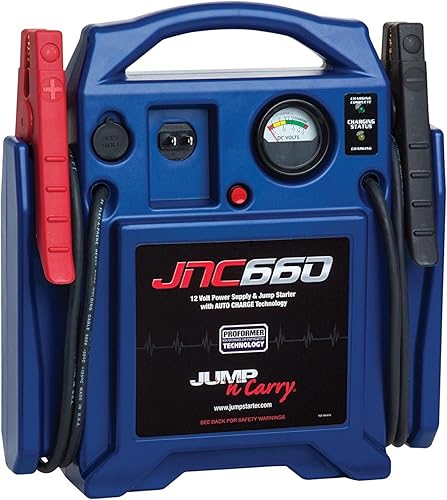
- 1700 peak amps
- 22Ah lead-acid AGM battery
- 46 in #2 AWG cables
- Onboard voltmeter
The long cables and onboard voltmeter suit a garage or service vehicle where carrying weight matters less. Confirm engine suitability with Clore before choosing it for a truck.
Pros
- 46 in heavy-duty cables
- Onboard charge-status voltmeter
- 12V accessory outlet
Cons
- Weighs 18 lb
- Engine suitability needs confirmation with Clore
The Clore JNC660 makes the most sense in a garage or service vehicle where cable reach matters more than carrying weight. Its 46 in #2 AWG cables give you a clear measurement to compare with your truck's connection layout.
The pack uses a 22Ah lead-acid AGM battery and provides 1700 peak amps. Confirm engine suitability with Clore before buying, since a truck compatibility label doesn't guarantee fit for every engine.
An onboard voltmeter shows charge status, and a DC outlet powers compatible 12V accessories. The controls suit buyers who want a jump box centered on starting and accessory power rather than USB-C charging.
At 18 lb, this is a more demanding pack to lift from storage and position near an engine bay. Check both the storage location and the route you'll carry it.
Choose it when its cables suit your setup and you have a secure place to keep it. Skip it for a light carry kit or if you can't confirm suitability for your engine.
How should you size a truck jump starter?
Match voltage, fuel type and engine displacement first, then allow for the conditions in which you'll need help. A pack that covers a small gas SUV doesn't automatically cover a diesel pickup.
Find displacement in the owner's manual or vehicle information, rather than guessing from trim names. Compare it with the correct gas or diesel limit for each pack.
What makes the best jump starter for trucks a suitable fit?
The best jump starter for your truck must cover the actual engine and electrical system, with clamps that can reach the approved connections. Peak output is only one part of that fit.
A manufacturer engine limit is a compatibility guide, not a promise that every battery condition will lead to a start. A damaged battery, poor connection or unrelated mechanical fault can still prevent the engine from starting.
If your engine sits at a model's upper limit and you expect difficult winter starts, consider a suitable pack with a higher engine limit. Extra capacity doesn't replace correct cold-weather use or a healthy vehicle battery.
Our jump starter amp guide explains why peak amps alone don't settle the choice.
Check dual batteries and connection points
Two batteries don't automatically mean a truck has a 24V system. Some trucks use two batteries in a 12V arrangement, but you must confirm the system and connection procedure in the owner's manual.
Don't split the clamps between batteries or choose terminals by guesswork. Use the designated jump points, which may be easier to reach than the battery itself.
Diesel drivers should also follow any pre-start sequence before cranking. Our guide to starting a diesel truck safely covers the extra checks.
Which features matter for a truck emergency kit?
Prioritize clamp access, storage and charging habits before convenience features. A pack that fits the engine but is hard to position or routinely left empty won't serve your truck well.
Cable reach and clamp access
Look under the hood before buying and identify where the pack can rest during use. The cables need to reach without stretching, crossing moving parts or pulling the clamps sideways.
Recessed terminals and covered jump points can make clamp access awkward. Compare the available space with the clamp shape, and keep the pack away from belts, fans and hot exhaust parts.
The JNC660 provides a defined cable length to plan around. Don't assume every compact pack will reach from the same resting place.
Charging speed and the equipment it needs
Fast charging helps only if you have the right adapter and cable where you need them. Check the entire charging setup, including whether an adapter is included.
A USB-C connector alone doesn't guarantee charging speed. Keep the correct charger with the pack, or assign a home charging spot so it doesn't disappear into a drawer of phone accessories.
Vehicle charging is useful during travel, but it can't rescue an empty pack while the truck itself won't start. Charge the pack before departure.
Lights, inflators and device power
A flashlight helps you find terminals in poor light, though you may still want a separate light to keep both hands free. Keep roadside visibility equipment accessible without unloading the truck.
An integrated inflator is useful for low pressure, but it draws from the same stored energy you may need for starting. Check the pack's charge after inflation rather than putting it straight back into storage.
USB charging is helpful on a trip, especially for a phone needed to call for assistance. Avoid using the pack as your everyday power bank if that means it returns to the emergency kit nearly empty.
How should you set up a new truck jump starter?
Charge it, learn its controls and check its fit before storing it in the truck. This turns an unfamiliar box into equipment you can use without searching for missing parts.
- Confirm that the unit, clamps, cable and other included accessories are present.
- Read the charging instructions and fully charge the pack as directed.
- Identify the truck's approved jump points in the owner's manual.
- Check that the pack can rest securely while the clamps reach those points.
- Learn the status lights, error messages and any boost control without enabling output.
- Store the instructions and accessories together, then set a recharge reminder.
Check storage space with the doors, seats and cargo in their normal positions. A pack shouldn't roll around, rub against loose tools or become trapped under heavy equipment.
Keep it somewhere you can reach when the cargo area is full. On a work truck, secure storage also keeps the unit from sliding during hard braking.
How do you use a truck jump starter without common mistakes?
Follow both the truck's manual and the pack's instructions, including the connection sequence and rest periods. Safety features support correct use; they don't replace identifying the right connections.
Stop if the vehicle battery is cracked, leaking, swollen or suspected to be frozen. A jump starter isn't the right response to visible battery damage.
Make a clean connection
Park securely, apply the parking brake and switch off unnecessary electrical loads. Remove metal jewelry, keep loose clothing clear and identify positive and negative connections before attaching anything.
Attach the positive clamp and the specified negative connection in the order required by the manuals. Use the designated ground point when instructed, and keep clamps clear of fuel-system parts.
A clamp resting on dirt, corrosion or a loose connection may not transfer power properly. Don't keep trying to start the truck while ignoring a connection warning.
Respect crank limits and boost modes
Use the stated crank duration and rest interval rather than holding the key longer. Repeated attempts can overheat equipment and drain the pack without addressing the cause.
If the pack doesn't detect the battery, recheck the connections and read the error guidance. Don't press a boost or override control simply because the truck hasn't started.
Some override modes change how automatic detection or protection works. Use one only under the exact conditions allowed by that model's instructions.
Stop when the symptoms don't fit a weak battery
A pack is meant to supply starting power, not diagnose every no-start problem. If the engine cranks normally but won't run, more peak amps may not help.
After the truck starts, remove the clamps in the required order and keep them from touching. Our guide on how to use a portable jump starter provides a fuller walkthrough.
How do you keep a jump starter ready through heat and cold?
Follow the model's storage, operating and charging limits separately. A temperature allowed for use may not be allowed for charging.
Don't leave the pack on a dashboard in direct sunlight or store it wet after roadside use. Let it reach an allowed charging temperature before plugging it in.
Cold weather can make starting harder while also reducing battery performance. If winter starts are your main concern, compare our best jump starters for cold weather before deciding.
Check charge before long trips and after using the light, inflator or USB ports. Gooloo's quarterly storage recharge guidance is a useful reminder that even a pack with a long standby claim needs attention.
Inspect cables, clamp jaws and the case during those checks. Stop using a pack with swelling, damaged insulation or other damage, and follow the manufacturer's service or disposal guidance.
What should you do after the truck needs a jump?
Find out why the battery went flat, especially if it happens again. A jump starter gets the engine turning but doesn't repair a failing battery, charging fault or unwanted electrical drain.
Leaving lights on may explain a single event. Repeated slow starts or another dead battery soon afterward deserve a battery and charging-system check.
Don't assume a short drive restores a deeply discharged battery. A suitable charger may be needed, and our jump starter vs battery charger guide explains their different jobs.
Recharge the jump starter after use, return every accessory to its bag and record the next charge check. If the pack travels between vehicles, make sure it returns to the truck before the next trip.
Which truck jump starter should you choose?
The best jump starter for trucks is the one that covers your engine and stays ready in your kit. Make the final choice by the job you need it to do.
- Choose the NOCO Boost GB70 for a shared household kit when both vehicles fit its engine range and rugged housing matters.
- Choose the Wolfbox 4000A for a larger compatible diesel pickup when you want a lighter pack, a screen and an included fast charger.
- Choose the Wolfbox MV24A when pickup tire top-ups are part of the same roadside kit.
- Choose the NOCO Boost GBX45 for a smaller compatible truck or SUV when quick USB-C PD recharging is the priority.
- Choose the Gooloo GT4000S for its broader gas engine coverage and device charging on truck trips.
- Choose the Clore JNC660 for garage use when its long cables suit the connection layout and Clore confirms engine compatibility.
Before ordering, settle 3 questions: does it fit the engine, can the clamps reach, and where will you recharge it? If you're choosing for other vehicles too, our best jump starter guide helps compare the wider options.
Our top 3 picks at a glance
-
1
-
2
-
3
Frequently asked questions
What size jump starter do I need for a truck?
Choose a jump starter that covers your truck's engine displacement, fuel type and battery-system voltage. Check gas and diesel limits separately, since the same pack can have different limits for each fuel.
Also check cable reach and the vehicle's approved connection points before deciding.
Are truck jump starters different from car jump starters?
Truck jump starters need to match the truck's starting demands, but the truck label alone doesn't guarantee suitability. A smaller gas pickup and a large diesel can need different packs.
Use engine fit, system voltage, clamp access and storage needs to narrow your choices before comparing extra features.
Can a portable jump starter start a diesel truck?
Yes, a portable jump starter can start a diesel truck when its diesel engine limit and voltage match the vehicle. Follow the truck's instructions for battery connections and any pre-start procedure.
Our guide to jump starting a diesel truck explains the extra checks, including vehicles with more than one battery.
Should I choose peak amps or engine size?
Use engine size, fuel type and voltage as your first filters, then consider peak output alongside the other features. A larger peak number doesn't guarantee cable reach, cold-weather suitability or compatibility with your truck.
Our guide to how many amps you need for a jump starter explains the sizing details.
How often should I recharge a portable jump starter?
Follow your model's recharge schedule, recharge after use and check its charge before long trips. Gooloo recommends charging the GT4000S at least every 3 months during long-term storage.
Keep charging temperature limits separate from operating limits, and don't assume a pack left in the truck is still ready.