6 Best Jump Starter for Diesel Trucks (November 2026)
The best jump starters for diesel trucks include the NOCO Boost GB70 for smaller diesel pickups, the Oxilam 6000A for larger diesel trucks, and the NOCO Boost GB150 for shared work trucks.
On this page (9 sections)
- Which is the best jump starter for your diesel truck?
- How should you size a jump starter for a diesel truck?
- What should you check under the hood before buying?
- What safety features matter when jump-starting a diesel truck?
- How do you prepare a jump starter before the first trip?
- How should you use a portable pack on a diesel truck?
- How do you keep a diesel truck jump starter ready?
- Which common mistakes leave diesel truck owners stranded?
- Which diesel truck jump starter should you choose?
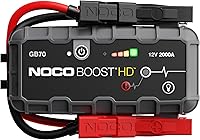
The NOCO Boost GB70 is the best jump starter for diesel truck owners with compatible 12V systems and engines up to 6.0L. Larger engines need a model with a higher diesel limit, even if the smaller pack leads this roundup.
Start with your truck's voltage and engine size, then consider winter use, clamp access and how you'll keep the pack charged. A large peak-amp number cannot make up for the wrong voltage or an undersized unit.
Our picks at a glance
-
1

-
2

-
3

Which is the best jump starter for your diesel truck?
Choose the highest-ranked model that fits your truck and charging routine. The GB70 leads for smaller compatible diesels, while the other picks cover larger engines or offer features better suited to travel and shared kits.
We compared diesel engine coverage, connection protections, charging options and portability. Engine fit comes first, so a lower-ranked model can be the right choice for your truck.
| Product | Best for | Peak current | Diesel engine rating | Weight | Our score |
|---|---|---|---|---|---|
| NOCO Boost GB70 | smaller diesel pickups | 2000A | Up to 6.0L | 5 lb | 8.8 |
| Oxilam 6000A | larger diesel trucks | 6000A | Up to 12L | 8.0 | |
| NOCO Boost GB150 | shared work trucks | 3000A | Up to 7.0L | 7.5 lb | 7.6 |
| Oxilam 24000mAh | truck camping | 10000A | 7.4 | ||
| Trekure 8000A | carrying between vehicles | 8000A | Up to 12.0L | 7.3 | |
| NOCO Boost GBX155 | frequent road trips | 4250A | Up to 8.0L | 7.2 |
NOCO Boost GB70: Best for smaller diesel pickups
- 2000A peak power
- Rated for diesel engines up to 6.0L
- Spark-proof and reverse-polarity protection
- 400-lumen flashlight
Choose the GB70 for a smaller diesel pickup when you want connection protections and an IP65-rated housing. Check its engine limit before buying for a full-size truck.
Pros
- Clear diesel engine limit
- Spark-proof and reverse-polarity protection
- IP65-rated housing
Cons
- Not suitable for engines above its diesel limit
- 6-hour recharge needs planning
The NOCO Boost GB70 suits a diesel pickup within its 6.0L engine limit when you want a pack you can carry and store with your roadside gear. Its 5 lb weight makes it lighter than the other NOCO models in this group.
It provides 2000A peak output, spark-proof connections and reverse-polarity protection. Those protections help with certain connection errors, but you still need to identify the correct jump points and follow both manuals.
The IP65-rated housing and rubberized covering are useful features for a truck emergency kit. Its 400-lumen light can help illuminate the connection area, though a separate work light keeps both hands free.
Choose this model if your truck fits comfortably within its coverage and you can keep it charged between trips. NOCO gives a 6-hour recharge time, so check it before departure rather than while loading the truck.
Skip the GB70 if your diesel exceeds its engine limit. It also makes less sense than a faster-charging option if you often discover your emergency gear is low just before leaving.
Oxilam 6000A: Best for larger diesel trucks
- 6000A peak current
- Rated for diesel engines up to 12L
- 10 safety protections
- LED screen
A numerical diesel limit makes this Oxilam worth considering for larger compatible trucks. Its battery-status screen helps you check readiness before a trip.
Pros
- Stated 12L diesel rating
- 10 safety protections
- LED battery-status screen
Cons
- Requires more than 50% charge before starting
- Needs scheduled charging during long storage
The Oxilam 6000A is a practical option for a larger compatible 12V diesel truck, with stated coverage up to 12L. That numerical limit gives you a clear starting point for checking engine fit.
Its LED screen shows remaining battery status, which helps when the unit spends weeks between uses. Oxilam includes 10 safety protections covering faults such as short circuits, reversed polarity and sparks.
The 800-lumen light offers steady, strobe and SOS modes. Two USB outputs let the pack serve as a backup for small devices, while the Type-C port handles input charging.
Oxilam requires more than 50% charge before starting and recommends charging every 3 months during long storage. Put that reminder on your calendar if this pack will live in a seldom-used truck.
Choose it for its broader diesel coverage and visible charge status. Skip it if you expect to leave a pack unchecked for long periods, because its readiness depends on keeping that charging routine.
NOCO Boost GB150: Best for shared work trucks
- 3000A peak power
- Rated for diesel engines up to 7.0L
- Spark-proof and reverse-polarity protection
- 500-lumen flashlight
The GB150 suits a shared emergency kit for compatible work trucks within its diesel limit. Its weight and recharge time favor planned storage and charging.
Pros
- Covers diesel engines beyond the GB70 limit
- Spark-proof and reverse-polarity protection
- IP65-rated housing
Cons
- Heaviest model here with a stated weight
- 7-hour recharge needs planning
The NOCO Boost GB150 fits compatible diesels up to 7.0L, making it a step up for trucks outside the GB70's coverage. Its 3000A peak output comes with spark-proof and reverse-polarity protection.
This model makes sense for a shared work-truck kit when every vehicle falls within its limits. Keep a short vehicle checklist with the kit so nobody assumes one pack fits every truck in the yard.
At 7.5 lb, the GB150 favors a secure storage spot over frequent carrying. Its IP65-rated housing and rubberized covering suit a kit that moves between the cab and work areas.
The 500-lumen light helps with low-light tasks, and NOCO gives a 7-hour recharge time. Assign someone to recharge the pack after use rather than passing a partly depleted unit to the next driver.
Choose it when you need its higher engine coverage and can plan charging. Skip the extra weight if the NOCO GB70 review confirms that the smaller model meets your needs.
Oxilam 24000mAh: Best for truck camping

- 10000A peak current
- 24000mAh capacity
- 10 safety protections
- 30W charging hub
Choose this Oxilam for its mix of USB-C, USB and DC connections after confirming truck compatibility. Its broad diesel claim provides less sizing detail than a numerical engine limit.
Pros
- 30W charging hub
- USB-C, USB and DC connections
- 1600-lumen light
Cons
- No numerical diesel engine limit
- Requires more than 50% charge before starting
The Oxilam 24000mAh suits truck camping and road trips where device charging matters alongside emergency starting. It combines a 30W charging hub with USB-C input and output, dual USB outputs and a DC port.
Oxilam claims support for all gas and diesel engines, but gives no numerical diesel limit. Confirm coverage for your exact truck before choosing it, because the 10000A peak figure does not settle that question.
The pack has extended 8 AWG jumper cables, an LCD status display and a 1600-lumen light. Its 3.2 lb weight also makes it easier to carry than the NOCO models here.
Oxilam calls for more than half charge before starting and a recharge every 3 months during long storage. Using it to power camp gear can eat into the reserve you need to start the truck.
Choose it if its ports solve a real travel need and truck compatibility is confirmed. Skip it if you want a clear numerical engine limit without having to seek further confirmation.
Trekure 8000A: Best for carrying between vehicles

- 8000A peak current
- 26800mAh capacity
- Built-in handle
- Three light modes
The handle and storage bag suit a kit you carry between compatible vehicles. Learn Trekure's cable connection order and starting window before you need it.
Pros
- Stated 12.0L diesel rating
- Built-in carrying handle
- Connection lights and audible alerts
Cons
- Requires starting within 30 seconds of proper clamp connection
- Cable must connect to the unit before the battery
The Trekure 8000A suits drivers who carry one emergency pack between compatible vehicles. Its built-in handle and storage bag give you a straightforward way to move the unit and keep its cables together.
Trekure rates it for diesel engines up to 12.0L and includes 8 AWG jumper cables. Connection indicator lights and audible alerts can help you spot an error before attempting to start.
The 26800mAh pack also has an 18W USB port and an 800-lumen light. Those features suit travel use, but keep enough charge in reserve for the pack's main job.
The operating sequence needs attention: connect the jumper cable to the unit before attaching the clamps as directed. Trekure also requires starting within 30 seconds after a proper clamp connection.
Choose it if easy carrying matters and you're willing to learn that sequence in advance. Skip it if several drivers will share the pack without reading its instructions, since connection order and timing are part of using it correctly.
NOCO Boost GBX155: Best for frequent road trips

- 4250A peak power
- Rated for diesel engines up to 8.0L
- USB-C PD recharging in 2.7 hours
- 60W USB-C power bank
The GBX155 suits travelers who want faster recharging and USB-C power for other gear. It also covers larger diesel engines than the other NOCO models here.
Pros
- Highest diesel limit among these NOCO picks
- USB-C Power Delivery input and output
- Spark-proof and reverse-polarity protection
Cons
- Fast charging requires a suitable USB-C PD setup
- 7 lb weight adds bulk to a travel kit
The NOCO Boost GBX155 suits compatible diesel trucks up to 8.0L, especially when faster recharging is a priority. It has the highest diesel limit among the NOCO models in this roundup.
NOCO gives a full recharge time of 2.7 hours through USB-C Power Delivery. The brand also says 5 minutes of charging from empty can provide enough power for a start, though a full charge is the better plan before travel.
Its 60W USB-C port works for both input and output. Match your charging equipment to that power requirement, since a low-output USB source will not deliver the stated fast recharge.
The pack includes spark-proof and reverse-polarity protection, a 60-second timer and a 500-lumen light. Learn the timer's operation before an emergency so you can follow the required starting window.
Choose it for a larger compatible diesel or a travel kit built around USB-C charging. Skip it if you cannot support its charging needs or the 7 lb weight makes it awkward to carry.
How should you size a jump starter for a diesel truck?
Match starting-system voltage and diesel engine size first, then allow for the conditions in which you'll need help. A pack chosen only by its headline amp figure can still be the wrong fit.
Read the diesel limit, not the gasoline limit. Diesel engines generally need more cranking effort, so a pack's larger gas-engine allowance does not apply to your diesel truck.
Choosing the best diesel truck jump starter near an engine limit
Choose a unit that covers your engine without rounding its size down. If your truck sits at a model's maximum diesel limit, consider a higher-rated compatible option for cold weather or demanding use.
That extra coverage is useful headroom, not a promise that every discharged battery will start. Battery condition, cable contact and the pack's state of charge still affect the result.
Check dual-battery trucks by system voltage
Two batteries do not automatically mean a truck has a 24V starting system. Batteries connected in parallel can still form a 12V system, while a series arrangement changes the voltage.
Use the truck manual or get qualified help to identify the system and approved jump points. These picks are for 12V use, so exclude them if your truck requires a 24V jump source.
Treat peak amps as one clue
Peak current is a brief maximum, not a measure of how long a pack can support cranking. Differences in how brands report it also make it a poor stand-alone comparison.
Capacity figures do a different job and do not translate directly into engine coverage. Our guide to choosing a jump starter explains how to balance fit, protections and charging features.
What should you check under the hood before buying?
Check clamp access and a safe place to support the pack before choosing a model. An engine-compatible starter is awkward to use if its clamps cannot reach the approved connection points.
Find the positive jump terminal and the designated negative connection or ground point in the truck manual. Some trucks provide remote jump posts that are easier to reach than the battery itself.
Look for covers, crowded wiring and recessed terminals that could limit clamp placement. The clamps need secure metal contact, with cables kept clear of belts, fans and hot parts.
Consider where the unit can rest without pulling on its cables or sliding into the engine bay. A carrying handle helps you move a pack, but it does not replace a stable support point.
Keep the pack accessible in the cab or another suitable storage area. A unit buried under tools or cargo takes longer to retrieve, especially when the truck is parked against a wall or roadside barrier.
What safety features matter when jump-starting a diesel truck?
Prioritize reverse-polarity protection, short-circuit protection and clear connection indicators. These features help manage specific errors, but correct clamp placement and a sound battery remain essential.
A pack that refuses to activate may be protecting against a bad connection or another fault. Read the indicator instructions rather than repeatedly moving the clamps or pressing buttons.
Never jump a battery that is cracked, leaking, swollen or suspected to be frozen. Stop if you notice smoke, unusual heat, a strong odor or damaged cables.
Keep the clamps apart and remove metal jewelry before working around the battery. Wear eye protection and avoid leaning over the battery while making connections.
A force-start or manual override mode may bypass normal detection or some safeguards. Use such a mode only when the unit's instructions permit it and you understand why normal operation failed.
For the full process, read how to jump-start a diesel truck. If your kit must serve several vehicle types, our truck and SUV jump starter guide helps you compare their needs.
How do you prepare a jump starter before the first trip?
Prepare the pack while the truck is working normally, so an emergency is your first use rather than your first look at the instructions. Learn its charging method, indicators and connection sequence at home.
- Read both manuals. Find the truck's approved jump points and the pack's limits, crank duration and cooling intervals.
- Follow the model's first-charge instructions. Do not assume every lithium pack uses the same setup routine.
- Inspect the cables and clamps. Look for damaged insulation, loose parts and a secure connection to the pack.
- Check the charging equipment. A cable that fits does not guarantee the required power or charging protocol.
- Pack the essentials together. Store the instructions, charging cable and required adapters with the starter.
You can locate the truck's jump points and plan cable routing without connecting the pack. That preparation helps you avoid balancing a unit on an unstable surface in poor light.
If several people use the truck, show each driver where the kit lives and how to read its status. Keep the correct manual with it, especially when your household or workplace has several different models.
How should you use a portable pack on a diesel truck?
Follow the truck manual and the pack's own sequence, including any wait-to-start light, connection window and crank limit. A generic sequence should never override instructions for your exact equipment.
Park securely, apply the parking brake and switch off unnecessary electrical loads. Check the battery and confirm that the pack has enough charge before connecting anything.
Use the approved jump points and make firm clamp contact with clean metal. If the connection indicator shows a fault, stop and resolve it before attempting to crank.
Follow the truck's normal diesel starting process, including any glow-plug or intake-heater instructions. Do not invent a long waiting period with the pack attached, especially if it has a timed starting window.
Keep each start attempt within the pack's stated limit and allow the required rest between attempts. Repeated long cranking can overheat equipment and drain the reserve without solving the fault.
Once the engine starts, disconnect in the order the manuals specify and keep the cables clear of moving parts. Arrange a battery and charging-system check if the cause of the discharge is unclear.
How do you keep a diesel truck jump starter ready?
Keep it charged, protected and easy to inspect. A pack that worked months ago may not have enough reserve when you next need it.
Check the charge before long trips, after device charging and after every jump-start attempt. Follow the brand's storage schedule rather than waiting for the display to reach empty.
Store it within the stated temperature limits and away from direct sun, heaters and loose metal tools. Do not assume a rugged shell makes prolonged heat exposure or wet charging safe.
If the pack has been in severe cold, follow its instructions for bringing it within the allowed operating or charging range. Do not heat it with a flame, hot engine part or other uncontrolled source.
Inspect the case, charging port, cables and clamps during each check. Stop using a pack with swelling, cracked insulation or other damage.
Before replacing a cable or adapter, confirm that it meets the unit's requirements. Our guide to how to charge a jump starter explains the charging checks worth making.
Which common mistakes leave diesel truck owners stranded?
The biggest mistakes are buying the wrong fit, neglecting charge and forcing repeated start attempts. Preventing those errors matters more than choosing the largest number on the box.
- Using the gas-engine limit. Compare your truck with the diesel allowance for the exact model.
- Assuming all trucks use the same voltage. Confirm the system, especially on commercial equipment or modified vehicles.
- Ignoring poor terminal contact. A powerful pack cannot make a loose clamp connection secure.
- Treating standby claims as a maintenance schedule. Check the pack according to its instructions and before important trips.
- Draining the emergency reserve on devices. Phone and camp-gear charging should leave enough power for starting.
- Using override as the first step. Investigate a refused connection before bypassing normal safeguards.
- Expecting a jump to repair the truck. A faulty starter, fuel problem or failed battery needs the right diagnosis.
Slow cranking and normal-speed cranking with no ignition are different symptoms. If the engine turns normally but will not fire, more jump-start attempts may simply drain the pack.
A successful start also does not mean a deeply discharged battery is fully recharged. Find the cause of the discharge and restore the battery with a suitable charging plan.
Which diesel truck jump starter should you choose?
The best jump starter for diesel truck use is the one that covers your engine, matches its voltage and stays ready in your kit. Use the following decision rules to make the final choice.
- Choose the NOCO Boost GB70 for a smaller compatible diesel when manageable weight and protected connections are your priorities.
- Choose the Oxilam 6000A for a larger compatible truck when you want a numerical diesel limit and a visible charge display.
- Choose the NOCO Boost GB150 for compatible work trucks beyond the smaller NOCO's coverage, with a planned place to store and recharge it.
- Choose the Oxilam 24000mAh for truck camping when its ports are useful and compatibility with your exact diesel is confirmed.
- Choose the Trekure 8000A when carrying the kit between vehicles matters and every user understands its connection sequence.
- Choose the NOCO Boost GBX155 when larger NOCO engine coverage and faster USB-C recharging fit your travel routine.
Before buying, write down your engine size, starting voltage and approved connection points. Then check that you have a suitable charger and a practical storage spot.
Read our diesel truck jump-start guide before putting the pack into service. For a kit that also covers household cars, compare our best jump starter picks and complete portable jump starter guide.
Our top 3 picks at a glance
-
1
-
2
-
3
Frequently asked questions
What size jump starter do I need for a diesel truck?
Choose a jump starter whose diesel engine rating covers your engine and whose voltage matches the truck's starting system. Battery condition, cold weather and access to the connection points also matter.
Check your truck manual first, then use our jump starter size guide to narrow the choice.
Can a portable jump starter start a diesel truck?
Yes, a portable jump starter can start a compatible diesel truck if it has enough available power and the battery can accept a jump. It cannot repair a failed battery or another starting fault.
Follow both manuals and our diesel truck jump-start guide for the connection process.
Are more peak amps always better for a diesel truck?
No. Peak amps describe a brief maximum output, so they do not show the full starting performance or confirm truck compatibility.
Start with voltage and diesel engine coverage, then compare cables, protections and charging needs.
Our guide to jump starter amps explains how to read these numbers.