5 Best Budget Jump Starter (November 2026)
The best budget jump starters include the AstroAI S8 for compact cars, the Oxilam 6000A for larger engines, and the Gooloo A3 for roadside tire top-ups.
On this page (8 sections)
- Which best budget jump starter fits your vehicle?
- Budget jump starter picks by use
- How do you choose a budget jump starter without overspending?
- What should you do when a new jump starter arrives?
- How do you use a budget jump starter safely?
- How do you keep a budget jump starter ready?
- Which common mistakes make a cheap jump starter poor value?
- Which best budget jump starter should you choose?
The best budget jump starter for most compact-car owners is the AstroAI S8, provided its engine limits cover your vehicle. Choose the Oxilam 6000A for larger engines or the Gooloo A3 if you also need tire inflation.
The useful budget choice is the kit you can keep charged, store safely and connect correctly. A bigger peak-current number won't help if the starter doesn't suit your vehicle or its cables can't reach the approved connection points.
This guide compares engine coverage, roadside extras and the care each option needs. For an overview of the category, start with our complete portable jump starter guide, or learn the connection process in how to use a portable jump starter.
Our picks at a glance
-
1

-
2

-
3
Which best budget jump starter fits your vehicle?
Choose by vehicle compatibility first, then decide which extras deserve space in your emergency kit. Every option here is for a 12 V system, so none belongs on a 24 V vehicle system.
FixerFriend compared engine coverage, safety features, charging guidance and included accessories. The order favors the everyday budget buyer, while the individual recommendations explain when another pick makes more sense.
Use the table to narrow your choices before reading the product sections. Confirm your engine size and fuel type from the vehicle manual instead of assuming that every car, pickup or SUV has the same needs.
| Product | Best for | Engine fit | Vehicle voltage | Extra features | Our score |
|---|---|---|---|---|---|
| AstroAI S8 | compact cars | Up to 6.0 L gas or 3.0 L diesel | 12 V | Flashlight and power bank | 8.2 |
| Oxilam 6000A | larger engines | OXILAM claims all gas and up to 12 L diesel | 12 V | LED display, USB outputs and flashlight | 8.0 |
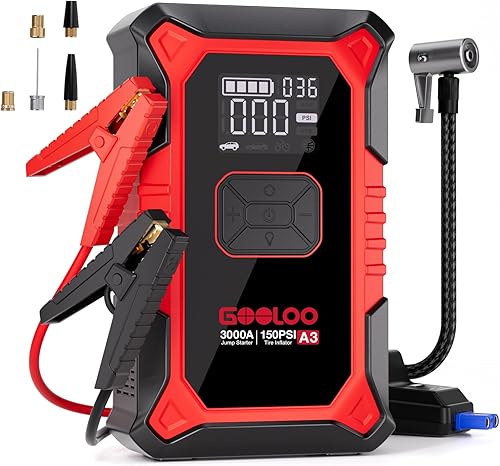
| Gooloo A3 | roadside tire top-ups | Up to 9.0 L gas or 6.5 L diesel | 12 V | Air compressor and digital pressure gauge | 7.9 |
| ZEVZO ET03 | organized trunk storage | Up to 8.0 L gas or 7.0 L diesel | 12 V | Carrying case and LCD display | 7.8 |
| Sharmeal 7000A | carrying between vehicles | Sharmeal claims all gas and up to 12.0 L diesel | 12 V | Power bank, flashlight and carrying case | 7.0 |
Budget jump starter picks by use
The AstroAI S8 is the starting point for a small-car kit, while the other picks address larger engines, tire inflation or different storage needs. Choose the product that solves your actual roadside problem.
AstroAI S8: Best for compact cars
- For up to 6.0 L gas or 3.0 L diesel engines
- 12 V vehicles
- Flashlight and power bank
- 8 integrated protections
The first choice for a compact-car emergency kit when its engine limits cover your vehicle and you don't need tire inflation.
Pros
- Compact body for everyday storage
- 8 integrated protections
- Boost mode for low-voltage batteries
Cons
- Lower diesel engine limit than the other picks
- AstroAI advises warming the unit before use in extreme cold
AstroAI S8 suits drivers who want a compact emergency starter without a tire pump attached. AstroAI specifies coverage up to 6.0 L gas or 3.0 L diesel, making it the first option to consider for a compatible everyday car.
Its body measures 7.9 x 4.5 x 3.7 in, so check the storage space with the cables packed alongside it. A unit that fits neatly in your chosen spot is easier to keep accessible than a loose kit buried beneath luggage.
The smart boost system detects battery voltage and flashes green below 9 V, allowing the boost button to be used as instructed. Learn that signal before an emergency so you don't confuse a low-voltage prompt with permission to ignore other warnings.
Its 8 protections include reverse polarity, overcurrent and short circuit protection. These support careful use, but correct clamp placement and sound battery condition still matter.
Buy it for a compatible small-car kit. Skip it if your diesel exceeds its limit, you need an inflator, or extreme-cold readiness is your main buying concern.
Oxilam 6000A: Best for larger engines
- OXILAM claims support for all gas and up to 12 L diesel engines
- LED battery display
- 2 USB outputs
- 10 safety protections
A larger-engine option with a charge display and 2 USB outputs for drivers building one kit around several roadside needs.
Pros
- Broad stated engine coverage
- Battery status display
- 2 USB outputs for device charging
Cons
- Requires vehicle-specific compatibility checks for large engines
- OXILAM advises a charge above 50% before starting
Oxilam 6000A is the stronger fit here for buyers shopping around a larger engine. OXILAM claims coverage for all gas engines and diesels up to 12 L, subject to the vehicle and starter instructions.
The LED battery display helps you check readiness before leaving home. OXILAM advises keeping the charge above 50% before a start, so a pack that still powers its screen may need charging before it belongs back in the car.
Its 2 USB outputs are useful when a roadside delay also leaves a phone running low. Keep enough charge for starting rather than treating the pack as your everyday device charger.
The unit has 10 safety protections, including reverse polarity and short circuit protection, plus a flashlight. Those functions suit a shared emergency kit for compatible vehicles with different engine sizes.
Buy it for larger-engine coverage and visible charge status. Skip it if tire inflation is the main extra you need, and don't treat broad compatibility wording as approval for every commercial vehicle or battery arrangement.
Gooloo A3: Best for roadside tire top-ups
- Air compressor with 150 PSI maximum pressure
- For up to 9.0 L gas or 6.5 L diesel engines
- Automatic inflation shut-off
- Power bank and flashlight
Choose it when you'll use both jump starting and tire inflation, rather than buying a compressor feature that sits unused.
Pros
- Compressor with automatic shut-off
- 5 inflation modes and 5 nozzles
- Digital tire pressure gauge
Cons
- Inflation uses energy from the emergency battery reserve
- Charging temperature range is 14°F to 113°F
Gooloo A3 suits drivers who will use both jump starting and tire inflation. GOOLOO specifies engine coverage up to 9.0 L gas or 6.5 L diesel, alongside a compressor with a 150 PSI maximum pressure.
The inflator includes 5 modes, 5 nozzles, a digital pressure gauge and automatic shut-off. Set the target from your vehicle's tire-pressure placard, not the compressor's maximum or the maximum pressure molded into the tire.
This is a useful combination for routine pressure top-ups before a trip. It also serves bikes and balls with the appropriate nozzle, though those jobs use energy you may want to reserve for a vehicle emergency.
GOOLOO specifies operation and storage from -4°F to 140°F, with charging limited to 14°F to 113°F. Let the unit reach its permitted charging temperature before plugging it in after exposure to cold or heat.
Buy it if an inflator fills a real gap in your kit. Skip it if you already carry a suitable pump and want a starter dedicated to that one job.
ZEVZO ET03: Best for organized trunk storage

- For up to 8.0 L gas or 7.0 L diesel engines
- Carrying case included
- LCD battery display
- 10 safety protections
A useful fit for drivers who want the starter, clamps and charging cable stored together, with a screen for charge checks.
Pros
- Case holds the starter and accessories
- LCD battery status screen
- Clamp lights and beeps indicate errors
Cons
- Force start has specific charge requirements
- Charging adapter is not included
ZEVZO ET03 suits drivers who want organized storage and a charge screen, with engine coverage up to 8.0 L gas or 7.0 L diesel. The included case holds the starter and its accessories together.
That case is useful if tools and luggage share your trunk. Keep the clamps and charging cable in their assigned place so a missing part doesn't turn a charged starter into an incomplete kit.
The LCD shows battery status, while lights and beeps on the smart clamps indicate errors. Read what those signals mean before storing the unit, since a warning should lead to a check rather than another starting attempt.
ZEVZO specifies a working range of 14°F to 140°F. For its force-start function on a battery at 0 V, ZEVZO requires the starter to be fully recharged or above 14 V; that figure refers to the pack's readiness.
Buy it for a complete storage setup with visible status. Skip it if you need tire inflation, and arrange a compatible charging adapter because one isn't included.
Sharmeal 7000A: Best for carrying between vehicles

- Sharmeal claims support for all gas and up to 12.0 L diesel engines
- 0.99 lb weight
- Metal clamps
- 14 safety protections
A lightweight choice for moving an emergency kit between compatible vehicles, with a case to keep its parts together.
Pros
- 0.99 lb weight
- Metal clamps
- Carrying case included
Cons
- No built-in tire inflator
- Broad engine claims still require vehicle-specific checks
Sharmeal 7000A suits buyers who often carry a kit between compatible vehicles. It weighs 0.99 lb, includes a carrying case and uses metal clamps.
Sharmeal claims support for all gas engines and diesels up to 12.0 L. Check each vehicle separately before sharing the unit, especially if the household includes both a small car and a larger diesel.
The USB port and 3-mode flashlight add basic backup functions without a built-in compressor. Sharmeal describes 14 protections, including reverse polarity, overcurrent and low-temperature protection, but protection counts alone don't tell you which starter will suit you best.
The smart cable includes a forced-start button for fully drained batteries. Keep its instructions with the kit and make sure another driver understands the normal connection process before borrowing it.
Buy it when low carrying weight matters. Skip it if you need inflation, and remember to put a shared kit back in the vehicle taking the next trip.
For larger vehicle needs, compare our guide to jump starters for trucks and SUVs.
How do you choose a budget jump starter without overspending?
Spend on engine fit, usable connections and a charging routine before paying attention to extra functions. An inexpensive kit earns its place by being ready for your vehicle.
Match a budget jump starter to engine size and fuel
Start with system voltage, engine displacement and fuel type. A starter's gas-engine limit doesn't transfer directly to a diesel of the same size, because starting demands differ.
Leave room for your use conditions when comparing compatible options. A unit near its stated engine limit deserves closer attention if you expect cold starts, a deeply discharged battery or repeated attempts.
Large trucks can have battery arrangements that need vehicle-specific steps. Our guide to choosing a jump starter explains fit, while how to jump start a diesel truck covers the extra checks for that job.
Compare more than peak amps
Use the brand's engine guidance and instructions alongside the peak-current figure. Peak amps don't show how long useful starting current lasts or whether the pack will handle your exact battery condition.
A larger printed number also doesn't prove better clamps, easier operation or stronger cold-weather performance. Don't rank these products by that number and assume the order answers every vehicle need.
For options beyond this budget group, see our best jump starter picks.
Check access to the connection points
Find your vehicle's approved jump points before buying. Some vehicles use remote terminals rather than direct access to the battery, and a cover or tight space can affect clamp placement.
Check that the cables and clamps can reach and attach as directed, with the pack resting safely. Never plan to stretch the leads across moving parts or balance the unit where it could fall into the engine bay.
Choose extras you'll maintain
A battery display helps with charge checks, while a case keeps the kit complete. USB outputs matter if you need emergency phone power, but they also give you another way to drain the starting reserve.
An inflator makes sense when tire pressure is a recurring task. Compare our jump starters with air compressors if you want that combined tool, and budget your attention for charging after inflation.
What should you do when a new jump starter arrives?
Charge it, learn its signals and check vehicle access before putting it away. The first roadside emergency should not be the first time you open the instructions.
Prepare the complete kit
Lay out the pack, clamps, charging cable and any included accessories. Confirm the required charging input and whether you need a separate wall adapter.
Give the unit its initial charge according to its manual. A pack can arrive partly discharged after storage, so don't assume it is ready because its screen or flashlight turns on.
Read the error indicators, charge threshold and required pauses between attempts. Save the manual offline or keep a paper copy with the cables so you can find it without phone reception.
Walk through access without making connections
Locate the hood release and approved connection points in daylight. Check how to reach them if the vehicle battery is too weak to operate powered locks or other access features.
Choose a storage spot that is secure, dry and reachable. Keep the pack away from loose metal objects, and protect its ports and cables from crushing beneath cargo.
If someone else drives the car, show them where the kit lives. They should know how to read its warnings and when to stop and call for help.
How do you use a budget jump starter safely?
Follow both the vehicle manual and the starter manual, including connection order and cranking limits. A general guide cannot replace model-specific directions or approved jump points.
Check the situation before attaching clamps
Move away from traffic if you can do so safely, apply the parking brake and turn off unnecessary electrical loads. Keep the starter, clothing and cables clear of belts, fans and other moving parts.
Don't attempt a jump if the battery is frozen, cracked, swollen or leaking. Smoke, a burning smell or an unclear electrical fault calls for professional help rather than another attempt.
Confirm polarity from the marked terminals or approved jump points. Cable color alone isn't a substitute for identifying the connections correctly.
Start with the normal mode
Use the regular starting process first and wait for the starter's ready signal. If it reports an error, stop and resolve the cause before cranking.
Keep each attempt within the manual's time limit, then allow the required rest. Repeated long cranking drains the pack and can overheat parts without solving the reason the engine won't start.
A no-start can involve fuel, ignition or other faults. A jump starter supplies starting power; it cannot repair every cause of a car failing to run.
Reserve override modes for the right situation
Boost and force-start controls are special procedures for batteries too low for normal detection. Depending on the design, an override can bypass some automatic checks.
Use one only when the manual permits it and you can confirm polarity, battery condition and the required pack charge. An error light is a reason to investigate, not a reason to press harder or switch modes.
After the engine starts, disconnect in the order both manuals require. Let the equipment cool if needed, inspect it and recharge it before returning it to storage.
How do you keep a budget jump starter ready?
Recharge after use and set a storage reminder rather than waiting for a dead car battery to reveal a flat pack. Standby time describes storage potential, not a promise that the unit is ready whenever you reach for it.
AstroAI, OXILAM and GOOLOO give charging guidance around a 3-month interval. Follow the specific instructions for ZEVZO and Sharmeal rather than borrowing another brand's schedule.
Check the charge before long trips and after anyone uses the USB ports or inflator. A pack used for camping power can come home with too little reserve for the car.
Store and charge within the permitted temperatures
Follow separate limits for operation, storage and charging. Permission to use a pack in cold weather doesn't mean it can be charged at that same temperature.
Avoid prolonged heat, direct sunlight and moisture. If the unit has been very hot or cold, let it reach its permitted charging range naturally instead of applying direct heat.
Inspect the casing, cable insulation, connectors and clamps during charge checks. Stop using a pack with swelling, leaks, damaged wiring or unusual heat, and follow local battery-disposal guidance.
Keep the emergency reserve separate from daily habits
Use a phone charger for routine device charging when one is available. Saving the starter for emergencies reduces the chance that an unrelated task leaves it depleted.
If you move one kit among cars, assign it to the next journey rather than leaving its location to memory. A simple departure check should cover the kit, charge level and cables.
Which common mistakes make a cheap jump starter poor value?
The biggest mistakes are buying for the wrong vehicle and neglecting charge. Avoid those before comparing small differences in accessories.
- Choosing by the largest peak-current number. Confirm voltage, engine fit and use limits first.
- Counting protections as a performance ranking. Learn the actual warnings and connection process instead.
- Leaving the pack unchecked for months. A storage reminder is part of keeping an emergency tool ready.
- Using force start to silence a warning. Stop and identify the fault before using any override.
- Treating the inflator's maximum as a tire target. Use the vehicle's recommended tire pressure.
- Expecting a jump to repair a failing battery. Starting the engine doesn't identify or fix the underlying fault.
A jump starter also isn't a substitute for a battery charger. Our explanation of whether a jump starter can charge a battery helps separate emergency starting from restoring battery charge.
If the car needs frequent jumps, arrange a battery and charging-system check. Repeatedly carrying out the same roadside rescue can leave you stranded when the pack is empty or the fault worsens.
Which best budget jump starter should you choose?
Choose the best budget jump starter for the vehicle you drive and the routine you'll follow. Use this final decision rule once compatibility is confirmed.
- AstroAI S8: Choose it for a compact-car emergency kit when you don't need tire inflation.
- Oxilam 6000A: Choose it for larger-engine coverage, a charge display and emergency device charging.
- Gooloo A3: Choose it when tire top-ups are a job you'll use the kit for regularly.
- ZEVZO ET03: Choose it for organized trunk storage and a visible charge check.
- Sharmeal 7000A: Choose it when carrying the kit between compatible vehicles makes low weight useful.
Before ordering, confirm engine fit, find the approved connection points and plan how you'll charge and store the unit. Those checks turn a budget purchase into a kit you can actually use.
If winter starting is your main concern, make temperature suitability the next decision and read our cold-weather jump starter guide.
Our top 3 picks at a glance
-
1
-
2
-
3
Frequently asked questions
What is the best budget jump starter?
The AstroAI S8 is the best budget jump starter here for most compact-car owners whose engines fall within its limits. Choose the Oxilam 6000A for larger-engine coverage or the Gooloo A3 for tire inflation.
Confirm your vehicle's voltage, fuel type and engine size before choosing.
How many amps should a budget jump starter have?
There isn't one peak-amp figure that fits every vehicle. Start with the starter's voltage and engine coverage, then consider cold conditions and the instructions for a deeply discharged battery.
Our guide to how many amps you need for a jump starter explains how to compare those requirements without choosing by the largest number.
Can a budget jump starter start a fully dead battery?
Some budget jump starters have boost or force-start modes for deeply discharged batteries. Those modes don't make a damaged battery safe to use, and each has its own operating steps.
Follow both manuals, meet the starter's charge requirement and avoid an override if you can't confirm the correct connections.
How often should you recharge a portable jump starter?
Recharge after use and follow your model's storage schedule. AstroAI, OXILAM and GOOLOO each give guidance around a 3-month interval, while other models need their own manual checks.
Don't use a long standby claim as your maintenance schedule.
Our guide on how to charge a jump starter explains general charging care.
Is a jump starter with an air compressor worth it?
A compressor is worth choosing if you'll use it for tire top-ups and want fewer separate tools. The Gooloo A3 combines inflation, pressure measurement and jump starting.
Remember that pumping uses the same battery reserve.
Compare more options in our jump starter with air compressor picks before deciding.